Dr. Jeff Masters' WunderBlog

Remainder of July hurricane outlook
Posted by: Dr. Jeff Masters, 2:31 PM GMT on July 15, 2009 +3
Not much has changed in the Atlantic since my early July Atlantic hurricane outlook posted two weeks ago. Tropical cyclone activity typically picks up a bit during the last half of July, but we are still a month away from when hurricane season really gets going. Since the current active hurricane period began in 1995, nine of 14 years (63%) have had a named storm form during the last half of July. We had two last-half-of-July named storms last year--Christobal and Dolly. As seen in Figure 1, most of the late July activity occurs in the Gulf of Mexico, Western Caribbean, and Carolina waters. However, a few long-track "Cape Verdes" hurricanes begin to occur. These are spawned by tropical waves that come off the coast of Africa. Tropical waves serve as the instigators of about 85% of all major hurricanes.


Figure 1. Tracks of all tropical storms and hurricanes 1851 - 2006 that formed July 16 - 31.The Gulf of Mexico coast is the preferred strike location. There are still very few major Cape Verdes-type hurricanes forming in the last half of July.

Sea Surface Temperatures
Sea Surface Temperature (SST) anomalies have warmed slightly over the past two weeks, and are about 0.3°C (0.5°F) above average over the tropical Atlantic between Africa and Central America (Figure 2). These are some of the coolest SST anomalies for this time of year that we've seen since 1994. The strength of the Azores-Bermuda high has been near or slightly below average over the past two weeks, driving slightly below average trade winds. Weaker trade winds don't mix up as much cold water from the depths, and cause less evaporative cooling. The latest 2-week run of the GFS model predicts continued near-average or slightly below average-strength trade winds through the end of July, so SSTs should remain slightly above average during this period.


Figure 2. Sea Surface Temperature (SST) departure from average for July 13, 2009. SSTs were about 0.3°C (0.5°F) average over the tropical Atlantic's Main Development region for hurricanes, from Africa to Central America between 10° and 20° North Latitude. Note the large region of above average SSTs along the Equatorial Pacific off the coast of South America, the hallmark of a developing El Niño episode. Image credit: NOAA/NESDIS

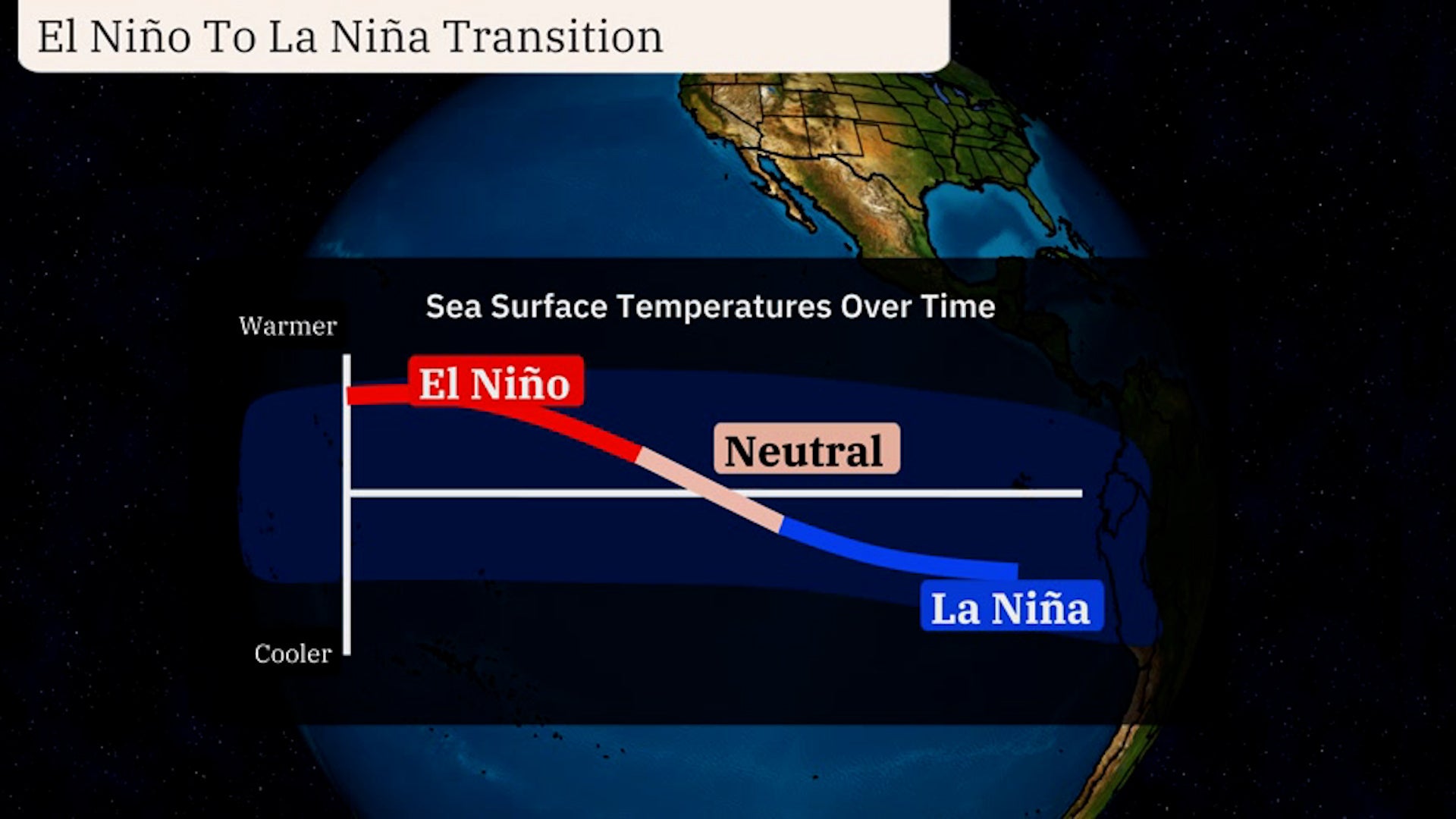
El Niño
El Niño conditions continue to amplify over the tropical Eastern Pacific. Ocean temperatures in the area 5°N - 5°S, 120°W - 170°W, also called the "Niña 3.4 region", are now 0.4°C above the threshold for a weak El Niño, according to the Australian Bureau of Meteorology (Figure 3). An increase of another 0.1°C will push the current El Niño into the "moderate" category. NOAA's Climate Prediction Center issued an El Niño Advisory earlier this month. The latest set of mid-June runs of the El Niño computer models are almost universally calling for El Niño conditions to become well-established for the peak months of hurricane season, August - October. It is likely that Atlantic hurricane activity will be suppressed in 2009 due to the strong upper-level winds and resulting wind shear an El Niño event usually brings to the tropical Atlantic.


Figure 3. Sea Surface Temperature (SST) departure from average for the the equatorial Eastern Pacific (the area 5°N - 5°S, 120°W - 170°W, also called the "Niña 3.4 region"). El Niño conditions exist when the SST in this region rises 0.5°C above average. As of July 8, 2009, SSTs in the Niño 3.4 region had risen to 0.9°C above average. To be considered an "El Niño episode", El Niño conditions must occur for five consecutive months, using 3-month averages. Image credit: Australian Bureau of Meteorology.

Wind shear
Wind shear is usually defined as the difference in wind between 200 mb (roughly 40,000 foot altitude) and 850 mb (roughly 5,000 foot altitude). In most circumstances, wind shear above 20 knots will act to inhibit tropical storm formation. Wind shear below 12 knots is very conducive for tropical storm formation. High wind shear acts to tear a storm apart. The jet stream's band of strong high-altitude winds is the main source of wind shear in July over the Atlantic hurricane breeding grounds, since the jet is very active and located quite far south this time of year.

The jet stream over the past three months has been locked into a pattern where a southern branch (the subtropical jet stream) brings high wind shear over the Caribbean, and a northern branch (the polar jet stream) brings high wind shear offshore of New England.

The jet stream is forecast to maintain this two-branch pattern for the next week. However, during the final week of July, the subtropical jet is forecast to weaken. This will leave regions of low wind shear over the Caribbean and Gulf of Mexico for the final week of July (Figure 4), increasing the chances of hurricane development.


Figure 4. Wind shear in m/s between 200 mb and 850 mb on July 31, 2009, as forecast by the 00Z July 15, 2009 run of the GFS model. The subtropical jet is forecast to weaken by this time, leaving regions of low wind shear over the Caribbean and Gulf of Mexico for the final week of July. Wind speeds are given in m/s; multiply by two to get a rough conversion to knots. Thus, the red regions of low shear range from 0 - 16 knots.

Dry air and African dust
June and July are the peak months for dust coming off the coast of Africa, and the Saharan dust storms have been quite active over the past month. Expect dust from Africa to be a major deterrent to any storms that try to form between Africa and the Lesser Antilles Islands in July. Several well-developed African waves have been done in by dry air from Africa over the past few weeks.

Steering currents
The steering current pattern over the past few weeks has not changed much. A persistent trough of low pressure has remained entrenched over the Eastern U.S. all summer, bringing cool and relatively moist weather to the eastern half of the country. This trough is strong enough to recurve any tropical storms or hurricanes that might penetrate north of the Caribbean Sea. Steering current patterns are predictable only about 3 - 5 days in the future, although we can make very general forecasts about the pattern as much as two weeks in advance. At present, it appears that the coming two weeks will maintain the strong trough over the Eastern U.S., which decreases the hurricane risk to the U.S. Gulf Coast. There is no telling what might happen to the steering current pattern during the peak months of August, September, and October, but it is often difficult to break a months-long steering current pattern like the current one.

Summary
Recent history suggests a 63% chance of a named storm occurring in the last half of July. Given that none of the computer models are forecasting tropical storm formation in the coming seven days, and SST and wind shear patterns look pretty average, I'll go with a 30% chance of a named storm forming this month. Such a storm would most likely form near the end of the month, when wind shear is expected to decline due to a weakening of the subtropical jet stream. The last time we went this long in the season without a named storm forming was in 2004, when the first storm (Alex) formed on August 1.

I'll have a new post on Friday.

Jeff Masters
Categories: Hurricane
  Permalink | A A A
Reader Comments
Display: 0, 50, 100, 200 Sort: Newest First - Order Posted
Viewing: 951 - 1001

Page: 1 | 2 | 3 | 4 | 5 | 6 | 7 | 8 | 9 | 10 | 11 | 12 | 13 | 14 | 15 | 16 | 17 | 18 | 19 | 20 | 21 | 22 | 23 | 24 | 25 | 26 | 27 | 28 | 29 | 30 | 31 | 32 | 33 | 34 | 35 | 36Blog Index

951. hunkerdown 10:45 PM GMT on July 16, 2009    
Quoting GeoffreyWPB:
WS%u2026%u2026Why do you always make a statement%u2026then follow it up by asking a question of affirmation?
Insecurity, don't you think, sir chief ?
Member Since: August 15, 2008 Posts: 0 Comments: 2514
952. GeoffreyWPB 10:45 PM GMT on July 16, 2009    
JFV and NRA have bonded! It's good to have friends and supporters on here!
Member Since: September 10, 2007 Posts: 0 Comments: 9127
953. NRAamy 10:48 PM GMT on July 16, 2009    
I'm like a momma bear when people mess with WS....other than that, he's just a good kid trying to learn, and I appreciate that...

:)
Member Since: January 24, 2007 Posts: 315 Comments: 31937
955. hunkerdown 10:48 PM GMT on July 16, 2009    
Quoting NRAamy:
I'm like a momma bear when people mess with WS....other than that, he's just a good kid trying to learn, and I appreciate that...

:)
*buzz sound* wrong answer
Member Since: August 15, 2008 Posts: 0 Comments: 2514
956. Chicklit 10:50 PM GMT on July 16, 2009    
Evening Wunderbloggers,
Looks like Texas is finally getting an eensy weensy bit of rain.
Link
Member Since: July 11, 2006 Posts: 14 Comments: 10254
957. NRAamy 10:50 PM GMT on July 16, 2009    
someone just made the ignore list....man, that was fast...

;)
Member Since: January 24, 2007 Posts: 315 Comments: 31937
958. Cavin Rawlins 10:50 PM GMT on July 16, 2009    
Quoting GeoffreyWPB:
Hate to put you on the spot 456..but % wise, how do see the TW in question actually crossing the Atlantic unscathed? And do you agree with the current models it will be nothing more than it is now, if it survives?


As I always say, the tropical wave will be there, convection or no convection. There is still a bit of dust to disperse and vertical shear is still questionable. SSTs however, become progressively warmer as one head west, and it has able to produce some level of convection in the EATL. It also has a noticable mid-low level circulation. 30% for now.

Member Since: July 24, 2005 Posts: 407 Comments: 19076
960. HadesGodWyvern 10:53 PM GMT on July 16, 2009    
Philippines Atmospherical Geophysical Astronomical Services and Administration

Tropical Storm "ISANG" continues to threaten Extreme Northern Luzon.

Tropical Cyclone Bulletin #9
===================================
At 5:00 AM PhST, Tropical Storm Isang (MOLAVE) located at 18.0°N 123.2°E or 150 km east southeast of Aparri, Cagayan has 10 minute sustained winds of 85 km/h (45 knots) with gustiness of 100 km/h (55 knots).

Warning Signals
=================

Signal Warning #2 (60-100 kph winds)

Luzon Region
-----------
1.Batanes
2.Cagayan
3.Babuyan Group
4.Calayan Group
5.Isabela
6.Kalinga
7.Apayao
8.Abra
9.Ilocos Norte

Signal Warning #1 (30-60 kph winds)

Luzon Region
------------
1.Northern Aurora
2.Quirino
3.Nueva Vizcaya
4.Ifugao
5.Benguet
6.Mt. Province
7.Pangasinan
8.La Union
9.Ilocos Sur

Additional Information
======================
Residents living in low-lying areas and near mountain slopes under storm warning signals #1 & #2 are alerted against possible flashfloods and landslides.

Those living along the coast under signal #2 are advised to be on alert against big waves generated by the storm.

The public and the disaster coordinating councils concerned are advised to take appropriate actions and watch for the next bulletin to be issued at 11 AM today.
Member Since: May 24, 2006 Posts: 43 Comments: 36688
961. Chicklit 10:55 PM GMT on July 16, 2009    
Looks like the wave at 30 is starting to take advantage of D-Max. CATL
Member Since: July 11, 2006 Posts: 14 Comments: 10254
963. GeoffreyWPB 10:56 PM GMT on July 16, 2009    
Thanks 456...also thanks for writing in understandable terms for those of us not as knowledgeable as yourself! You are an asset to this site!
Member Since: September 10, 2007 Posts: 0 Comments: 9127
964. SLU 10:56 PM GMT on July 16, 2009    
It looks good enough to be labeled an invest overnight if the convection persists. Also good enough to get at least an honourable mention in the 17/00z TWO.

Since it is already at 12n, if it is to develop further, it will have to traverse and survive a pool of slightly cooler SSTS around 79 - 81F between 35W and 45W (which is where the previous wave choked). Once it gets to 50W intact .... look out.

And the wave approaching 50W has a fair bit of turning associated with it too. I believe the convection will start to increase with it from tonight now that it is moving over slighly warmers waters, better low level convergence and that the dust outbreak in the vicinity has tapered off.
Member Since: July 13, 2006 Posts: 11 Comments: 2851
965. futuremet 10:58 PM GMT on July 16, 2009    
The WRF/NAM will be right if this keeps up

Member Since: July 19, 2008 Posts: 43 Comments: 4049
966. GeoffreyWPB 11:00 PM GMT on July 16, 2009    
Storm...To my untrained eye…it appears to be consolidating, heading a little north of west and looks to have a spin to it. But the question is will it survive the long trek in front of it.
Member Since: September 10, 2007 Posts: 0 Comments: 9127
967. futuremet 11:00 PM GMT on July 16, 2009    
It is heading into an area of drier air, let's see how it handles that.
Member Since: July 19, 2008 Posts: 43 Comments: 4049
968. WxLogic 11:01 PM GMT on July 16, 2009    
Quoting Chicklit:
Looks like the wave at 30 is taking advantage of D-Max. CATL


DMAX should be starting later tonight... but not quite yet. :)
Member Since: August 14, 2008 Posts: 4 Comments: 4667
969. cchsweatherman 11:01 PM GMT on July 16, 2009    
Quoting StormW:
Anyone look at the wave at 31W lately?


Yes. Just been keeping an eye on it, but nothing to get excited or concerned about at this time. Is there a particular reason why you asked that question?
Member Since: April 14, 2007 Posts: 8 Comments: 4926
970. Cavin Rawlins 11:02 PM GMT on July 16, 2009    
Quoting StormW:
Anyone look at the wave at 31W lately?


Yep, what's you take? I think it needs to be watched even though little expected for the time being.
Member Since: July 24, 2005 Posts: 407 Comments: 19076
971. GeoffreyWPB 11:02 PM GMT on July 16, 2009    
If I am correct...there are no models at this time that develop this into Ana?
Member Since: September 10, 2007 Posts: 0 Comments: 9127
972. plywoodstatenative 11:03 PM GMT on July 16, 2009    
would someone post a sat photo of that wave? every time that I try to link up, I freeze up on Mozilla
Member Since: November 15, 2005 Posts: 16 Comments: 4147
973. CaneWarning 11:04 PM GMT on July 16, 2009    
OK, I think we have something to watch. I was just looking at the radar and the models.
Member Since: April 26, 2009 Posts: 3 Comments: 3667
975. Chicklit 11:04 PM GMT on July 16, 2009    
Quoting WxLogic:


DMAX should be starting later tonight... but not quite yet. :)

Will be checking in and out...my school assignment due by midnight so it's all hands on the keyboard!
Wow. SAL has really cleared out of mid-atl!
Link
Member Since: July 11, 2006 Posts: 14 Comments: 10254
976. plywoodstatenative 11:04 PM GMT on July 16, 2009    
What I can say is this, every day that I come in here. Someone is freaking out about another wave or about some supposed development. Until models come into agreement and the NHC says anything in their updates, no need to cause undo panic in this blog.
Member Since: November 15, 2005 Posts: 16 Comments: 4147
978. futuremet 11:05 PM GMT on July 16, 2009    
Member Since: July 19, 2008 Posts: 43 Comments: 4049
979. Cavin Rawlins 11:06 PM GMT on July 16, 2009    
Quoting futuremet:
It is heading into an area of drier air, let's see how it handles that.


Member Since: July 24, 2005 Posts: 407 Comments: 19076
981. Tazmanian 11:07 PM GMT on July 16, 2009    
Quoting WeatherStudent:


That's a storm headed towards PR, ain't it, FM?


is that what he this said???
Member Since: May 21, 2006 Posts: 5088 Comments: 111355
982. HurricaneSwirl 11:07 PM GMT on July 16, 2009    
Quoting WeatherStudent:


Yes we have, you should try it.


LOL! Nice one. Lurking on here sometimes does result in a very wet desk...


here is the satellite image...
Member Since: July 7, 2008 Posts: 2 Comments: 3237
983. futuremet 11:07 PM GMT on July 16, 2009    
WS

That's a storm headed towards PR, ain't it, FM?

That is likely a tropical wave heading for PR. I agree with the NAM with the track, but not with the intensity. It still has to cross an area of drier air.
Member Since: July 19, 2008 Posts: 43 Comments: 4049
984. JRRP 11:08 PM GMT on July 16, 2009    
Member Since: August 16, 2007 Posts: 0 Comments: 4315
985. Ossqss 11:08 PM GMT on July 16, 2009    
Would that be the wave that followed the two other significant waves prior? Did it benefit from their energy and environment?
Member Since: June 12, 2005 Posts: 6 Comments: 8154
986. K8eCane 11:08 PM GMT on July 16, 2009    
Quoting plywoodstatenative:
What I can say is this, every day that I come in here. Someone is freaking out about another wave or about some supposed development. Until models come into agreement and the NHC says anything in their updates, no need to cause undo panic in this blog.


ahhh
thats what this blog is about....discussing waves and possible development and sometimes freaking out...and no one is yet
hello?
Member Since: April 26, 2006 Posts: 5 Comments: 2375
988. Tazmanian 11:09 PM GMT on July 16, 2009    
we may now have a moderate El Nino

its getinger stronger and stronger

Member Since: May 21, 2006 Posts: 5088 Comments: 111355
989. plywoodstatenative 11:09 PM GMT on July 16, 2009    
Please, lets not talk about anything until after the 28th.
Member Since: November 15, 2005 Posts: 16 Comments: 4147
990. stormwatcherCI 11:09 PM GMT on July 16, 2009    
Quoting WeatherStudent:


Don't let em' get to you.
Are you feeling a little excited that it seems like the wave around 31 w is trying to pull together ?
Member Since: October 9, 2008 Posts: 0 Comments: 8040
991. Seflhurricane 11:09 PM GMT on July 16, 2009    
looks like so far it is sustaining its deep convection , any computer models saying anything about it.
Member Since: July 14, 2009 Posts: 0 Comments: 2898
992. hunkerdown 11:10 PM GMT on July 16, 2009    
Quoting plywoodstatenative:
What I can say is this, every day that I come in here. Someone is freaking out about another wave or about some supposed development. Until models come into agreement and the NHC says anything in their updates, no need to cause undo panic in this blog.
The models won't come into agreement on an actual system until there is an actual system to initialize the models with (and even then models do not necessarily come into agreement).
Member Since: August 15, 2008 Posts: 0 Comments: 2514
993. stormwatcherCI 11:10 PM GMT on July 16, 2009    
Quoting StormW:


Yes...it stands the possibility to clowly develop...it's more organized than when I looked at it 8 hours ago. It may encounter some marginal conditions over the next 2 days, but last I looked, the upper environment was supposed to turn favorable again.
Any thoughts where it might head if it does develop ?
Member Since: October 9, 2008 Posts: 0 Comments: 8040
994. futuremet 11:10 PM GMT on July 16, 2009    
Quoting JRRP:
Link


Link me to that site

Great image
Member Since: July 19, 2008 Posts: 43 Comments: 4049
995. HurricaneSwirl 11:11 PM GMT on July 16, 2009    
is that wave around 31W the same wave that was extremely impressive when it came off of africa 2 days ago?
Member Since: July 7, 2008 Posts: 2 Comments: 3237
996. Cavin Rawlins 11:11 PM GMT on July 16, 2009    
Quoting Ossqss:
Would that be the wave that followed the two other significant waves prior? Did it benefit from their energy and environment?


It benefited from the wave at 44-49W which help disperse the dust alot ahead of the wave.
Member Since: July 24, 2005 Posts: 407 Comments: 19076
997. hunkerdown 11:11 PM GMT on July 16, 2009    
Quoting WeatherStudent:


That's a storm headed towards PR, ain't it, FM?
Actuall that used to be PR, as you call it, but recently they switched names with Cuba. PR is now that long, narrow island below Florida.
Member Since: August 15, 2008 Posts: 0 Comments: 2514
998. RufusBaker 11:11 PM GMT on July 16, 2009    
The current steering patterns dont look good for people on the west coast of FL. what ever goes into the gulf will be swept to the east.
Member Since: July 5, 2009 Posts: 0 Comments: 510
999. msphar 11:12 PM GMT on July 16, 2009    
Where's that darn Gates guy when you need him ?
Could use a fleet of 100 or so barges out there at 31W
Member Since: August 20, 2006 Posts: 0 Comments: 258
1001. WPBHurricane05 11:12 PM GMT on July 16, 2009    
Quoting Tazmanian:
we may now have a moderate El Nino

its getinger stronger and stronger


Maybe....but according to Joe Bastardi it will dissipate by winter.
Member Since: July 31, 2006 Posts: 56 Comments: 7929

Viewing: 951 - 1001

Page: 1 | 2 | 3 | 4 | 5 | 6 | 7 | 8 | 9 | 10 | 11 | 12 | 13 | 14 | 15 | 16 | 17 | 18 | 19 | 20 | 21 | 22 | 23 | 24 | 25 | 26 | 27 | 28 | 29 | 30 | 31 | 32 | 33 | 34 | 35 | 36Blog Index

New Comment
Community Standards Policy Comments will take a few seconds to appear.
Post Your Comments
Please sign in to post comments.
Not only will you be able to leave comments on this blog, but you'll also have the ability to upload and share your photos in our Wunder Photos section.
About JeffMasters
Jeff co-founded the Weather Underground in 1995 while working on his Ph.D. He flew with the NOAA Hurricane Hunters from 1986-1990.

Local Weather
Partly Cloudy
41 °F
Partly Cloudy
Community Activity