99L a threat to develop; damage from Typhoon Megi still largely unknown
Heavy thunderstorm activity has increased and grown more organized this morning over the southwestern Caribbean between Honduras and the Cayman Islands, in association with a tropical disturbance (Invest 99L). The storm is bringing heavy rain to the Cayman Islands; two inches has fallen so far this morning at Savannah on Grand Cayman Island. Recent satellite imagery shows that 99L has some rotation, and the winds on the northeast coast of Honduras at Puerto Lempira have shifted to the west-northwest, implying that 99L may be developing a surface circulation. Wind shear is a moderate 10 - 20 knots, which is low enough to allow some slow development. Water vapor satellite loops reveal that the atmosphere in the Western Caribbean is moist enough to support development, and the waters beneath are plenty warm, at 29°C. The latest SHIPS model forecast predicts that wind shear over the Western Caribbean will mostly remain in the moderate range, 10 - 20 knots, for the remainder of the week. The current north-northwest motion of 99L should continue until Wednesday, when a strong ridge of high pressure is forecast to build in, forcing 99L to the south or west. However, steering currents will be weak Wednesday through Friday, making it difficult to predict where 99L may wander to. The only models that develop 99L are the GFDL and HWRF. The GFDL model predicts that 99L will spend enough time over water to develop into a hurricane, and brings the storm to the coast of Mexico's Yucatan Peninsula on Sunday morning. The HWRF model has 99L making landfall over Honduras late this week, before the storm has a chance to develop into a hurricane. NHC is giving 99L a 40% chance of developing into a tropical depression by Thursday. I believe the odds are higher, near 60%. The Hurricane Hunters are on call to investigate 99L this afternoon.

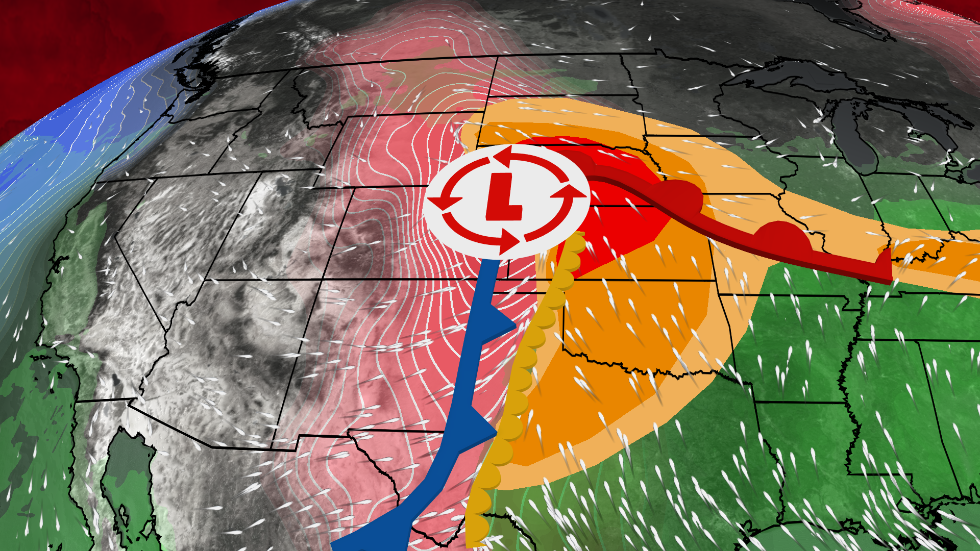
Figure 1. Morning satellite image of Invest 99L.
Damage from Super Typhoon Megi still largely unknown
The power is still out and communications are down over the majority of the northern portion of the Philippines' Luzon Island blasted by Typhoon Megi yesterday, so the extent of the destruction wrought by the great storm is still largely unknown. Preliminary news reports indicate that at least 10 people died, and the northern Philippine province of Isabela suffered severe damage. Megi hit Luzon on Monday morning at 3:30 UTC as a Category 5 super typhoon with sustained winds of 165 mph and a central pressure of 914 mb. Baguio near the west coast of northern Luzon received 7.72" of rain from the storm, and many mountainous regions likely received over a foot of rain.

Figure 2. Rainfall rates in excess of 1 inch per hour (orange colors) were observed by the polar-orbiting F-18 satellite in association with Megi at 00:40 UTC October 19, 2010. Image credit: Navy Research Lab, Monterey.
Passage over Luzon Island destroyed Megi's eyewall and inner core region, and the storm compensated by expanding and intensifying the portions of its circulation that were over water. Now that its center is back over water in the South China Sea, Megi has re-developed its inner core and has built a formidable new eyewall. At the same time, Megi has been able to maintain its larger size, and is now a much larger typhoon than when it hit the Philippines. This is similar to what happened to Hurricane Ike in 2008 when it passed over Cuba, and helped give Ike a very destructive storm surge when it came ashore over Texas. Wind shear is a low 5 - 10 knots over Megi, and the waters of the South China sea have a very high total heat content to great depth, so Megi should be able to intensify into a very dangerous Category 4 storm by Thursday. The larger size of Megi means that it will be able to deliver a significant storm surge in excess of ten feet to the coast of China of Friday or Saturday, when the storm is expected to make landfall near Hong Kong. As the storm approaches the coast on Friday, wind shear is expected to rise to the moderate or high range, and the total heat content of the ocean will drop significantly, so some weakening is to be expected. Still, Megi will probably hit China as a major Category 3 typhoon,bringing a significant storm surge, high winds, and widespread torrential rains that will likely make this a multi-billion dollar disaster for China.
"Daily Downpour" airing this afternoon
Our live Internet radio show, "Daily Downpour", will be airing today at 4pm EDT. The call in number is 415-983-2634, or you can post a question to broadcast@wunderground.com. You can tune in at http://www.wunderground.com/wxradio/wubroadcast.h tml, and I'll be discussing the latest info on Invest 99L with hosts Shaun Tanner and Tim Roche.
Jeff Masters
Reader Comments
Page: 1 | 2 | 3 | 4 | 5 | 6 | 7 | 8 | 9 | 10 | 11 | 12 | 13 | 14 | 15 | 16 | 17 | 18 | 19 | 20 | 21 | 22 | 23 | 24 | 25 | 26 | 27 — Blog Index
Then don't pay attention to it
problem solved...i just did a system restart...problem went away.....thanks for the advice though....
Sorry the weather can't provide you the stimulation you crave. I suggest you write to Mother Nature immediately and demand a full refund!!!
;-)
Upper level anti-cyclone continues to follow along, too.
If it has more thunderstorm activity, or the pressure gradient tightens up, it'll get designated IMO. It needs one or the other to happen first though.
That would be a good prediction.
Yes, as evidenced by both the RGB and Rainbow IR loops.
Transmitted: 19th day of the month at 19:37Z
Corrected: This observation corrected a previous observation.
Aircraft: Air Force Aircraft (Last 3 digits of the tail number are 303)
Mission Purpose: Investigate eight suspect area (flight in the North Atlantic basin)
Mission Number: 1
Observation Number: 13
A. Time of Center Fix: 19th day of the month at 19:09:00Z
B. Center Fix Coordinates: 17°23'N 83°29'W (17.3833N 83.4833W)
B. Center Fix Location: 191 miles (308 km) to the SW (226°) from George Town, Cayman Islands (GBR).
C. Minimum Height at Standard Level: Not Available
D. Estimated (by SFMR or visually) Maximum Surface Wind: 27kts (~ 31.1mph)
E. Location of the Estimated Maximum Surface Wind: 20 nautical miles (23 statute miles) to the NNW (347°) of center fix
F. Maximum Flight Level Wind Inbound: From 112° at 20kts (From the ESE at ~ 23.0mph)
G. Location of Maximum Flight Level Wind Inbound: 21 nautical miles (24 statute miles) to the NNW (347°) of center fix
H. Minimum Sea Level Pressure: 1009mb (29.80 inHg) - Extrapolated
I. Maximum Flight Level Temp & Pressure Altitude Outside Eye: 22°C (72°F) at a pressure alt. of 303m (994ft)
J. Maximum Flight Level Temp & Pressure Altitude Inside Eye: 23°C (73°F) at a pressure alt. of 302m (991ft)
K. Dewpoint Temp (collected at same location as temp inside eye): 22°C (72°F)
K. Sea Surface Temp (collected at same location as temp inside eye): Not Available
L. Eye Character: Not Available
M. Eye Shape: Not Available
N. Fix Determined By: Penetration, Wind and Pressure
N. Fix Level: 1,500 feet
O. Navigation Fix Accuracy: 0.02 nautical miles
O. Meteorological Accuracy: 5 nautical miles
Remarks Section - Remarks That Were Decoded...
Maximum Flight Level Wind: 20kts (~ 23.0mph) in the north quadrant at 18:59:30Z
Maximum Flight Level Wind Outbound: 21kts (~ 24.2mph) in the southeast quadrant at 19:15:30Z
Sea Level Pressure Extrapolation From: Below 1,500 feet
Remarks Section - Additional Remarks...
BEST WINDSHIFT CENTER WAS AT 19:05:50Z AT 17 31N 83 35W
Flagged
The concentrated thunderstorm activity is the kicker. Has everything else, really, but NHC likes to see that over the center.
IMO 99L's a 25kt Depression.
"BEST WINDSHIFT CENTER WAS AT 19:05:50Z AT 17 31N 83 35W"
Tourism and financial services are the twin pillars of our economy. Cruise tourism is the strongest portion of the tourism product right now and when we have bad weather the ships might either by pass us entirely or the number of passengers coming ashore is very limited.
It means that the winds shifted, as you would expect in a closed circulation.
With a vortex message and winds supportive of a TD, I would think so.
However,
There could be other factors negating an upgrade, like, the 50% medium chance at 2pm from the NHC.
Forgiven LOL !
Tropical Storm
Wonder if they'll find enough to classify...
actually...here in honduras..on the north coast..heavy rains can raise havoc with agriculture...there are mountains just a couple of miles south of the ocean, all along the coast..and the coast is where the bananas and pineapples are grown...this is dole country..so, when we get heavy rain...the rivers go crazy and everything floods..including the producing areas..tourist isn't real big here...tropical fruit is
SFMR found 47 sustained, likely a gust.
41 knots
(~ 47.1 mph)
Location of that wind
19:37:00Z 17.450N 82.867W
There are quite a few uncontaminated TS readings in this observation.
Something like that. Persistent, deep convection over the coc, I believe.
And very susceptible to the amount of rain you have been getting, stay safe.
It's just not looking like a duck yet.
Fewer models runs tracking around in circles:
BAMD headed right for the Basque region.
45 knots
(~ 51.7 mph)
Several mid-high 40's on the last ob, more like a BARK, BARK.
Last vortex was 17.4N/83.5W. Right under that burst.
LMAO +10
Click for larger image:
If they determine that we do have closed circulation, we just bypassed TD and have Richard...
5 years ago today:
Hurricane Wilma did the unthinkable and became the strongest Atlantic hurricane on record.
Viewing: 351 - 401
Page: 1 | 2 | 3 | 4 | 5 | 6 | 7 | 8 | 9 | 10 | 11 | 12 | 13 | 14 | 15 | 16 | 17 | 18 | 19 | 20 | 21 | 22 | 23 | 24 | 25 | 26 | 27 — Blog Index