Dr. Jeff Masters' WunderBlog

Winds diminish for Arizona's fire; flooding from 94L kills 23 in Haiti
Posted by: Dr. Jeff Masters, 2:27 PM GMT on June 09, 2011 +8
The powerful winds that have fanned Arizona's massive Wallow fire into the state's second largest fire on record will diminish today, and the forecast for Eastern Arizona calls for more modest afternoon winds of 15 - 20 mph through Saturday. For the first time this week, NOAA's Storm Prediction Center has not issued red flag warnings for critical fire conditions in Eastern Arizona, and firefighters should be able to make progress battling the Wallow fire, which is 0% contained. Yesterday, Luna, New Mexico, located about 50 miles northeast of the fire, had wind gusts in excess of 30 mph for almost 7 hours, temperatures near 80°F, and humidities as low as 5%. The fire has grown steadily this week--300 square miles on Sunday, 365 square miles on Monday, 484 square miles Tuesday, and 608 square miles on Wednesday. Its current size is about 50% of the size of Rhode Island. The fire is close to beating the 2002 Rodeo-Chediski fire (732 square miles) as Arizona's largest fire in recorded history. Smoke from the Wallow fire has now blown downwind over 2,000 miles over the Atlantic Ocean, as seen using our wundermap for the U.S. with the Fire layer turned on. Smoke caused "Unhealthy" levels of air pollution (code red on the Air Quality Index) over much of new Mexico Wednesday. A separate fire burning in Southeast Arizona, the 167-square-mile Horseshoe Two fire, is the state's 5th largest fire on record, and is 50% contained. According to the Interagency Fire Center, 3.6 million acres have burned in the U.S. so far this year, the most on record for this early in the year--and more than double the 10-year average from 2001 - 2010 of 1.4 million acres. During May, 1.8 million acres burned, the greatest May fire acreage burned in the 12-year record. Extreme to exceptional drought conditions over most of Texas, New Mexico, and Eastern Arizona are largely responsible for the record fire season.


Figure 1. Smoke from Arizona's Wallow fire passed over the Washington DC area at a height of 5 - 9 km during the day on Wednesday, June 8, 2011. NASA Goddard's micropulse lidar in Greenbelt, Maryland took a vertical profile of particles in the atmosphere during the day. A lidar (short for LIght Detection And Ranging) is a laser detection system that bounces light waves off of particles in the atmosphere to determine where clouds and elevated pollution layers exist. During the afternoon hours, the lidar also detected large amounts of air pollution particles near the surface (orange colors) after 18 UTC (2pm EDT.) Air quality in the Washington D.C. area during the day on June 8 for particles was Moderate (84 on the Air Quality Index, code yellow), and was Unhealthy for Sensitive Groups (Air Quality Index of 150) for ozone pollution. The University of Maryland Smog Blog is where I got this image from, and is a good place to get daily discussions of air pollution.


Figure 2. Smoke billows from the rapidly growing Wallow fire in Eastern Arizona in this image taken by NASA's Aqua satellite at 1:25pm MDT June 8, 2011. The actively burning fire front (outlined in red) surrounds a vast area of charred land. High winds propelled the fire, igniting spot fires as much as three miles ahead of the fire front. Image credit: NASA.

Flooding from 94L kills 23 people in Haiti
The large, disorganized tropical disturbance (94L) that brought heavy rains to Jamaica, Cuba, and Haiti early this week is no more, but at least 23 people are dead and six missing in Haiti due to torrential flooding rains from the disturbance. Satellite-estimated rainfall amounts indicate 8 -10 inches of rain fell over Haiti's southwestern peninsula this week. The heaviest rains from the remains of 94L lie just north and west of Haiti, and may be capable of bringing 1 - 3 inches of rain to Haiti, the Bahamas, and eastern Cuba today. The NOGAPS model is suggesting the remains of 94L could reorganize into a strong tropical disturbance this weekend off the coast of South Carolina, but none of the other models are showing this. The NOGAPS model has had a poor track record handling the evolution of the wind shear pattern this week, and I'm not expecting any major regeneration of 94L. Wind shear is very high 30 - 50 knots in the region between Cuba and South Carolina, making development very unlikely. Elsewhere in the Atlantic, none of the reliable computer models is predicting tropical cyclone development over the next seven days.


Figure 3. Morning satellite image of Hurricane Adrian.

First hurricane of the Eastern Pacific hurricane season forms
Hurricane Adrian is putting on an impressive bout of rapid intensification, and has emerged as the season's first hurricane in the Eastern Pacific Ocean. Adrian is in an ideal environment for intensification, with light wind shear and ocean temperatures of 30°C (86°), and will likely become a major hurricane later today. Adrian is expected to remain far enough offshore the coast of Mexico to not pose a threat to that country, at least for the next three days. June hurricanes in the Eastern Pacific are much more common than in the Atlantic.

NOAA's pre-season prediction of the Eastern Pacific hurricane season, issued on May 16, calls for below average activity, with 12 named storms, 6.5 hurricanes, and 2 major hurricanes, with an ACE index 75% of the median. The 1981-2010 averages for the Eastern Pacific hurricane season are 15 - 16 named storms, 8 - 9 hurricanes, and 4 major hurricanes.

Jeff Masters
()
()
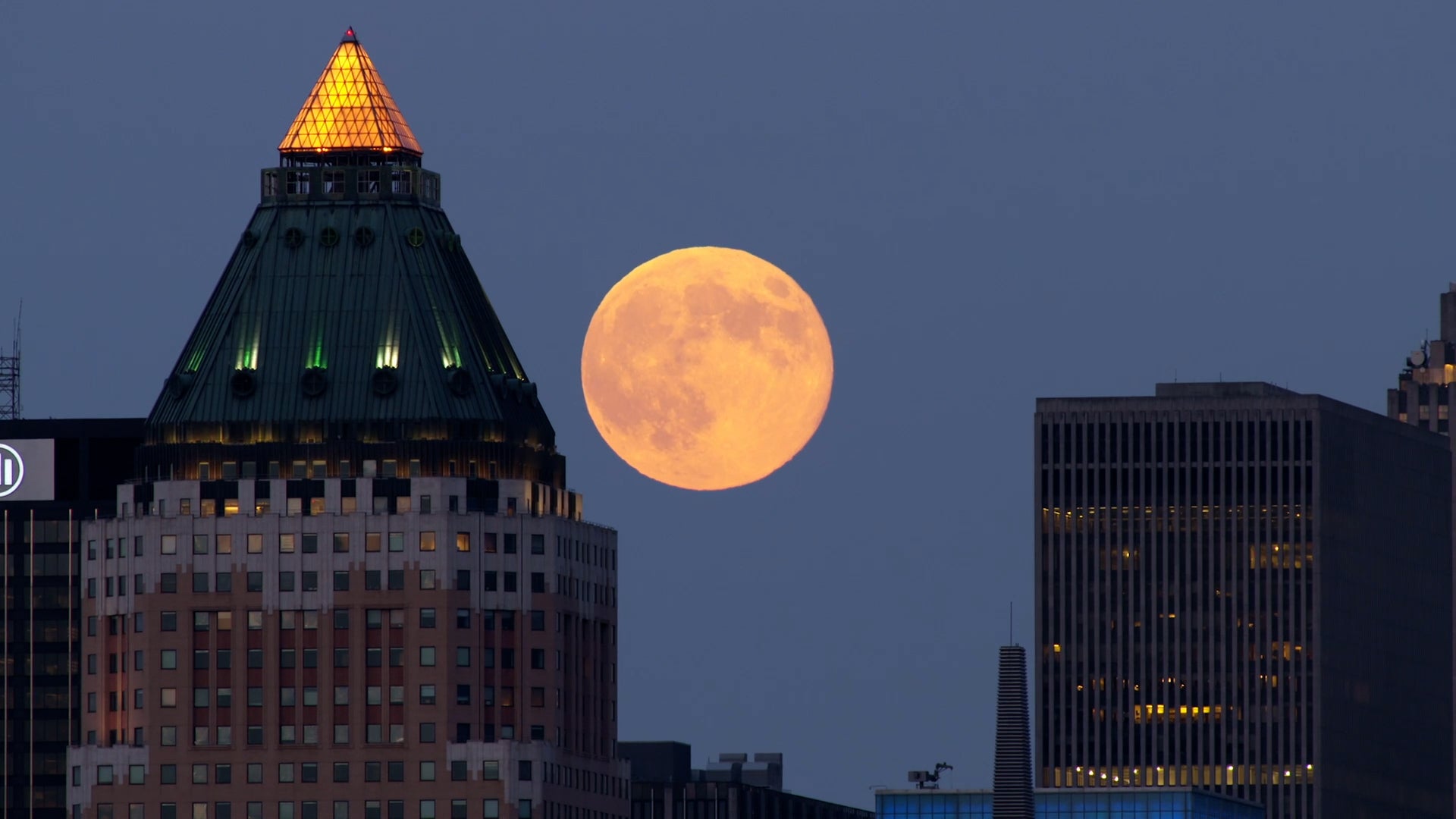
Smokey Moon 2 (gilg72)
This was later at 1109PM when there was heavier smoke from the Ariz Fires.
Smokey Moon 2
Categories: Fire
  Permalink | A A A
Reader Comments
Display: 0, 50, 100, 200 Sort: Newest First - Order Posted
Viewing: 1251 - 1264

Page: 1 | 2 | 3 | 4 | 5 | 6 | 7 | 8 | 9 | 10 | 11 | 12 | 13 | 14 | 15 | 16 | 17 | 18 | 19 | 20 | 21 | 22 | 23 | 24 | 25 | 26 — Blog Index

1251. NICycloneChaser 2:56 PM GMT on June 10, 2011    
Quoting ProgressivePulse:


I'm doing some serious wish casting today. I'm about 100 miles WNW :-)


Haha, here's hoping it wraps some convection round to its west.
Member Since: August 10, 2010 Posts: 2 Comments: 1958
1252. aquak9 2:58 PM GMT on June 10, 2011    
Quoting Jax82:


All clear here at 95/Old St Aug Rd. Small fires have been poppin up everywhere.

are you kidding?? ya'll are clear down there? That's crazy.
Member Since: August 13, 2005 Posts: 163 Comments: 25036
1253. goavs4 2:59 PM GMT on June 10, 2011    
Wow, what an impressive storm (even though the cloud tops are now warming)

Member Since: September 7, 2007 Posts: 0 Comments: 72
1254. iahishome 3:01 PM GMT on June 10, 2011    
Quoting ILwthrfan:
How much moisture will Adrian pump into the Southwest and west Texas?


Hi Il,

It really depends on the path. From my understanding, these East Pacific Hurricanes really take themselves out of prime area as they West and North. At some point after they weaken, they are usually picked up by a trough and remnants are scattered over the South Western US.

In my experience, 90% of the time, the most you'll get is some afternoon thunderstorms over the mountains and deserts, but sometimes, a powerful hurricane can get picked up quickly enough to remain somewhat together. I remember the only Tropical Depression to actually hit southern California in my lifetime in 1977 (or maybe 1978), so it does happen.
Member Since: July 24, 2005 Posts: 5 Comments: 499
1255. sailfish01 3:02 PM GMT on June 10, 2011    
Anyone thinking 94L will give some rain to FL? Looks like it all going to go east to me.
Member Since: October 20, 2005 Posts: 0 Comments: 96
1256. caneswatch 3:03 PM GMT on June 10, 2011    
Quoting Orcasystems:
Complete Update

TS BUSTED FORECAST ALIBI

Game 5 tonight... who is going to lead the series 3 games to 2?? I pick the Canucks :)


Um, they got completely embarrassed in Boston and now Boston has the momentum, so it ain't gonna happen :)
Member Since: October 8, 2008 Posts: 14 Comments: 4479
1257. BahaHurican 3:03 PM GMT on June 10, 2011    
Morning all.... quick lookin to say,

WHOOHOO!!!! It finally rained last night!!!! I haven't checked totals yet, but I'm sure we got at least an inch overnight here on New Providence. The cloud cover from 94L is still around, keeping it cool [hopefully for the rest of the day]. Hopefully this means we have started the rainy season, but not the flood season... lol

Member Since: October 25, 2005 Posts: 19 Comments: 17961
1258. weaverwxman 3:05 PM GMT on June 10, 2011    
everyone get one of these and maybe we can pump the ridge
Member Since: November 17, 2009 Posts: 0 Comments: 336
1259. islander101010 3:08 PM GMT on June 10, 2011    
Quoting iahishome:


Hi Il,

It really depends on the path. From my understanding, these East Pacific Hurricanes really take themselves out of prime area as they West and North. At some point after they weaken, they are usually picked up by a trough and remnants are scattered over the South Western US.

In my experience, 90% of the time, the most you'll get is some afternoon thunderstorms over the mountains and deserts, but sometimes, a powerful hurricane can get picked up quickly enough to remain somewhat together. I remember the only Tropical Depression to actually hit southern California in my lifetime in 1977 (or maybe 1978), so it does happen.
usually they move toward hi in a weaken state
Member Since: September 11, 2010 Posts: 0 Comments: 3069
1260. DookiePBC 3:09 PM GMT on June 10, 2011    
I'm looking at the maps in motion and find myself doing a Carlton Fisk trying to will the clouds west and into South Florida. So far, it hasn't worked...and my arms are getting tired.
Member Since: September 1, 2009 Posts: 0 Comments: 435
1261. pottery 3:09 PM GMT on June 10, 2011    
I completely forgot to say---

The Calabash tree shed all it's remaining leaves in a Frantic Leaf-Storm on the 6th. BOOM!
The next day, June 7, it was covered with small green leaves.

Ergo-
The Rainy Season OFFICIALLY began on JUNE 7th, 2011.

(everything that happened before that date, was Pre-Season).

It will rain in Florida, Texas, all over, very soon.
Member Since: October 24, 2005 Posts: 0 Comments: 20866
1262. nrtiwlnvragn 3:11 PM GMT on June 10, 2011    
OLD BLOG
Member Since: September 23, 2005 Posts: 12 Comments: 9089
1263. StAugustineFL 3:12 PM GMT on June 10, 2011    
Quoting aquak9:
totally socked in from smoke- less than two block visibility here in downtown Jacksonville.

must be fires nearby? and no air movement...it got real bad, real quick.


Hey Aqua, it's from the Espanola fire in northwest Flagler county.


Smoke from the Espanola wildfire is impacting the Jacksonville
Metro area this morning...

Smoke from the Espanola wildfire in Flagler County has drifted
northward up the St Johns River basin and is impacting the
Jacksonville Metro area this morning. A strong smell of smoke along
with visibilities of 2 to 4 miles will be common through the early
afternoon hours until the Atlantic sea breeze pushes the smoke
inland and west of the Metro area.

Also shows up quite well on visible sat.
Link
Member Since: March 8, 2011 Posts: 1 Comments: 580
1264. Grothar 3:34 PM GMT on June 10, 2011    
Member Since: July 17, 2009 Posts: 58 Comments: 19649

Viewing: 1251 - 1264

Page: 1 | 2 | 3 | 4 | 5 | 6 | 7 | 8 | 9 | 10 | 11 | 12 | 13 | 14 | 15 | 16 | 17 | 18 | 19 | 20 | 21 | 22 | 23 | 24 | 25 | 26 — Blog Index

New Comment
Community Standards Policy Comments will take a few seconds to appear.
Post Your Comments
Please sign in to post comments.
Not only will you be able to leave comments on this blog, but you'll also have the ability to upload and share your photos in our Wunder Photos section.
About JeffMasters
Jeff co-founded the Weather Underground in 1995 while working on his Ph.D. He flew with the NOAA Hurricane Hunters from 1986-1990.

Community Activity