Dr. Jeff Masters' WunderBlog

Did Hurricane Wilma have 209 mph sustained winds?
Posted by: Dr. Jeff Masters, 1:00 PM GMT on April 28, 2012 +51
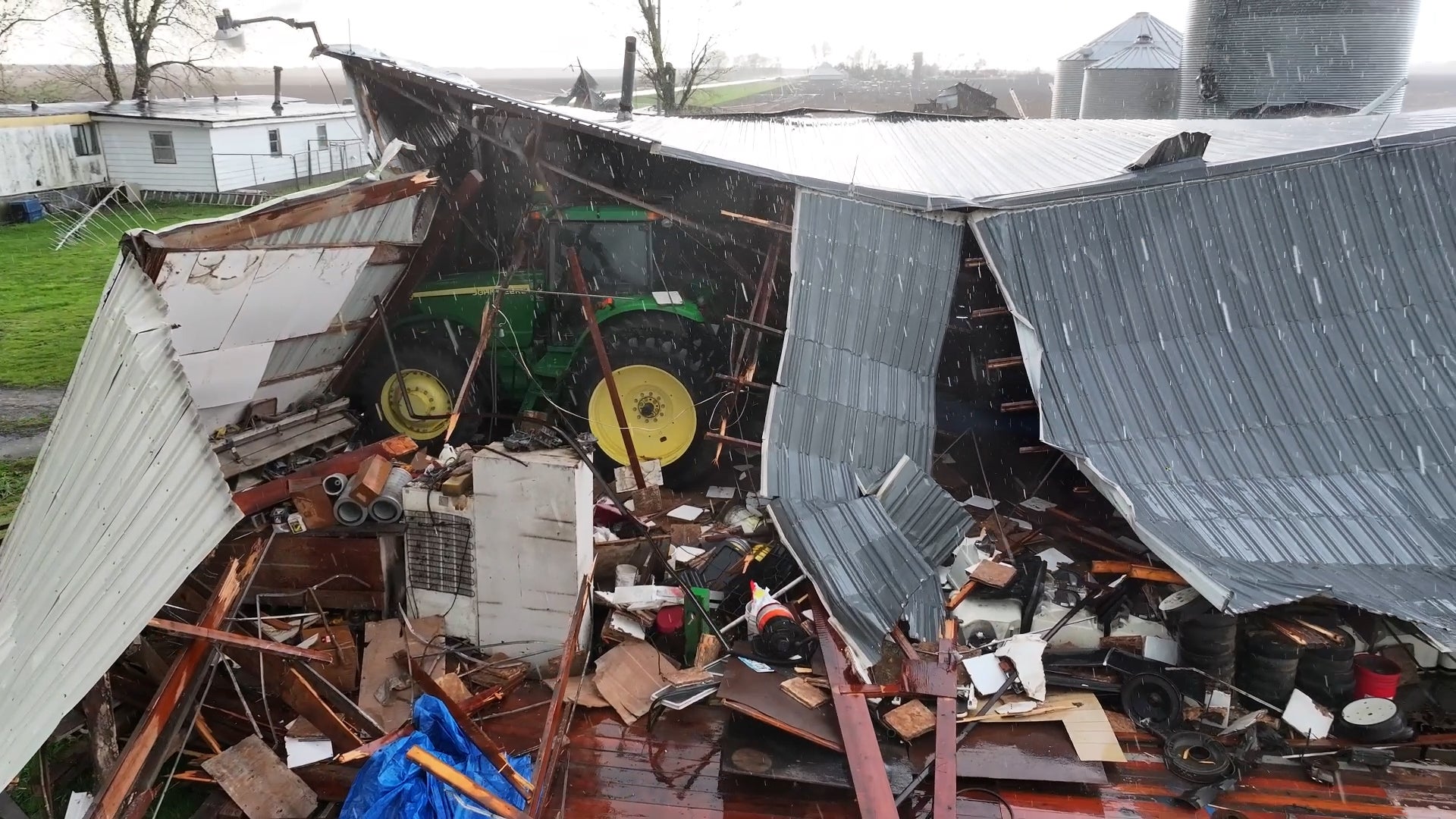
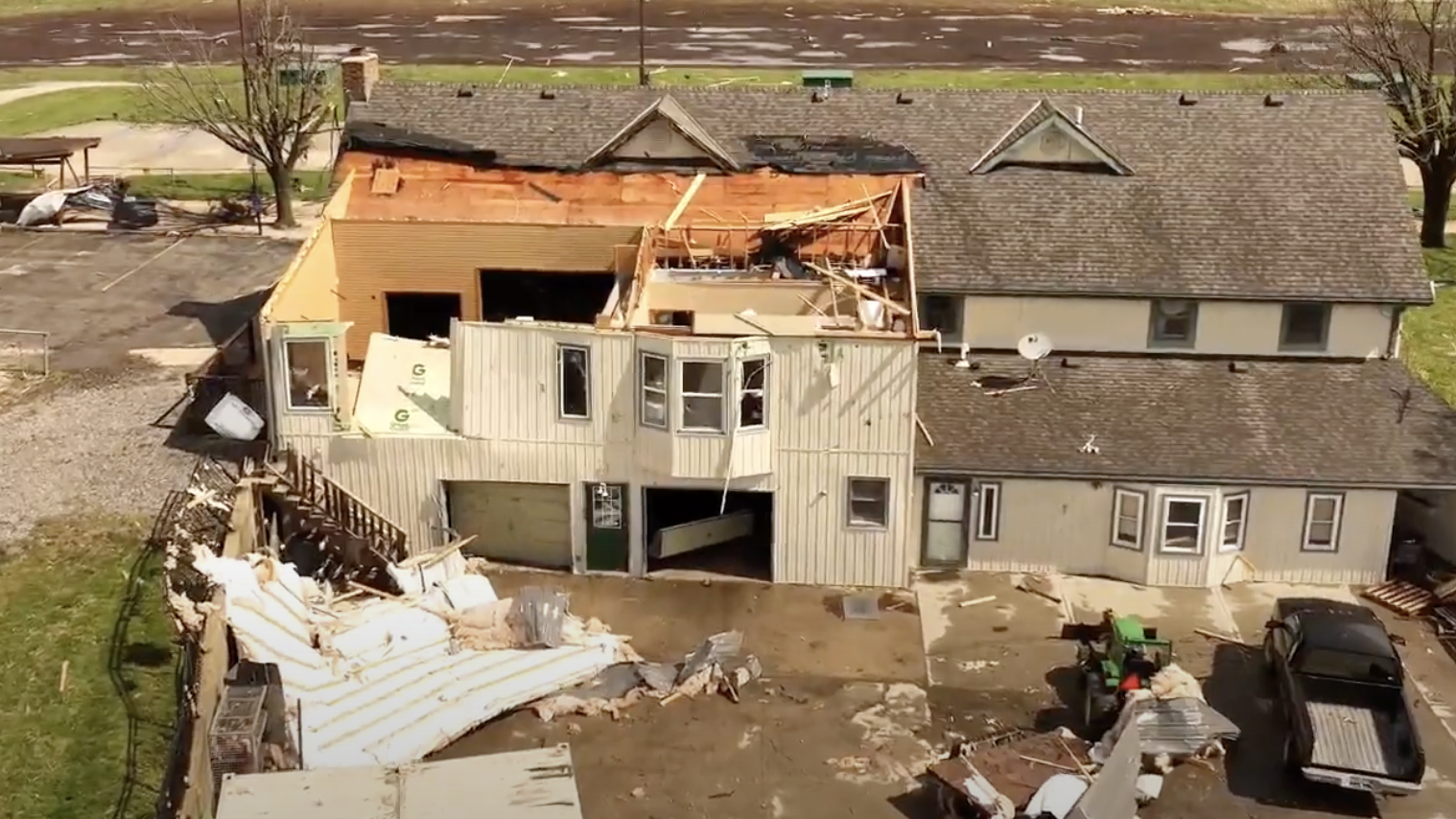
At last week's 30th Conference on Hurricanes and Tropical Meteorology of the American Meteorological Society, Dr. Eric Uhlhorn of NOAA's Hurricane Research Division presented a poster that looked at the relationship between surface winds measured by the SFMR instrument and flight-level winds in two Category 5 storms. Hurricane Hunter flights done into Category 5 Supertyphoon Megi (17 October 2010) and Category 5 Hurricane Felix (03 September 2007) found that the surface winds measured by SFMR were greater than those measured at flight level (10,000 feet.) Usually, surface winds in a hurricane are 10 - 15% less than at 10,000 feet, but he showed that in super-intense Category 5 storms with small eyes, the dynamics of these situations may generate surface winds that are as strong or stronger than those found at 10,000 feet. He extrapolated this statistical relationship (using the inertial stability measured at flight level) to Hurricane Wilma of 2005, which was the strongest hurricane on record (882 mb), but was not observed by the SFMR. He estimated that the maximum wind averaged around the eyewall in Wilma at peak intensity could have been 209 mph, plus or minus 20 mph--so conceivably as high as 229 mph, with gusts to 270 mph. Yowza. That's well in excess of the 200 mph minimum wind speed a top end EF-5 tornado has. The Joplin, Missouri EF-5 tornado of May 22, 2011 had winds estimated at 225 - 250 mph. That tornado ripped pavement from the ground, leveled buildings to the concrete slabs they were built on, and killed 161 people. It's not a pretty thought to consider what Wilma would have done to Cancun, Key West, or Fort Myers had the hurricane hit with sustained winds of what the Joplin tornado had.


Figure 1. Hurricane Wilma's pinhole eye as seen at 8:22 a.m. CDT Wednesday, Oct. 19, 2005, by the crew aboard NASA's international space station as the complex flew 222 miles above the storm. At the time, Wilma was the strongest Atlantic hurricane in history, with a central pressure of 882 mb and sustained surface winds estimated at 185 mph. The storm was located in the Caribbean Sea, 340 miles southeast of Cozumel, Mexico. Image source: NASA's Space Photo Gallery.


Figure 2. Damage in Joplin, Missouri after the EF-5 tornado of May 22, 2011. Image credit: wunderphotographer thebige.

Official all-time strongest winds in an Atlantic hurricane: 190 mph
The official record for strongest winds in an Atlantic hurricane is 190 mph, for Hurricane Allen of 1980 as it was entering the Gulf of Mexico, and for Hurricane Camille of 1969, as it was making landfall in Pass Christian, Mississippi. In Dr. Bob Sheets' and Jack Williams' book, Hurricane Watch, they recount the Hurricane Hunters flight into Camile as the hurricane reached peak intensity: On Sunday afternoon, August 17, and Air Force C-130 piloted by Marvin Little penetrated Camille's eye and measured a pressure of 26.62 inches of mercury. "Just as we were nearing the eyewall cloud we suddenly broke into a clear area and could see the sea surface below," the copilot, Robert Lee Clark, wrote in 1982. "What a sight! Although everyone on the crew was experienced except me, no one had seen the wind whip the sea like that before...Instead of the green and white splotches normally found in a storm, the sea surface was in deep furrows running along the wind direction....The velocity was beyond the descriptions used in our training and far beyond anything we had ever seen." So, the 190 mph winds of Camille were an estimate that was off the scale from anything that had ever been observed in the past. The books that the Hurricane Hunters carried, filled with photos of the sea state at various wind speeds, only goes up to 150 mph (Figure 2). I still used this book to estimate surface winds when I flew with the Hurricane Hunters in the late 1980s, and the books are still carried on the planes today. In the two Category 5 hurricanes I flew into, Hugo and Gilbert, I never observed the furrowing effect referred to above. Gilbert had surface winds estimated at 175 mph based on what we measured at flight level, so I believe the 190 mph wind estimate in Camille may be reasonable.


Figure 3. Appearance of the sea surface in winds of 130 knots (150 mph). Image credit: Wind Estimations from Aerial Observations of Sea Conditions (1954), by Charlie Neumann.


Figure 4. Radar image of Hurricane Camille taken at 22:15 UTC August 17, 1969, a few hours before landfall in Mississippi. At the time, Camille had the highest sustained winds of any Atlantic hurricane in history--190 mph.

The infamous hurricane hunter flight into Wilma during its rapid intensification
While I was at last week's conference, I had a conversation with Rich Henning, a flight meteorologist for NOAA's Hurricane Hunters, who served for many years as a Air Reconnaissance Weather Officer (ARWO) for the Air Force Hurricane Hunters. Rich told me the story of the Air Force Hurricane Hunter mission into Hurricane Wilma in the early morning hours of October 19, 2005, as Wilma entered its explosive deepening phase. The previous airplane, which had departed Category 1 Wilma six hours previously, flew through Wilma at an altitude of 5,000 feet. They measured a central pressure of 954 mb when they departed the eye at 23:10 UTC. The crew of the new plane assumed that the hurricane, though intensifying, was probably not a major hurricane, and decided that they would also go in at 5,000 feet. Winds outside the eyewall were less than hurricane force, so this seemed like a reasonable assumption. Once the airplane hit the eyewall, they realized their mistake. Flight level winds quickly rose to 186 mph, far in excess of Category 5 strength, and severe turbulence rocked the aircraft. The aircraft was keeping a constant pressure altitude to maintain their height above the ocean during the penetration, but the area of low pressure at Wilma's center was so intense that the airplane descended at over 1,000 feet per minute during the penetration in order to maintain a constant pressure altitude. By they time they punched into the incredibly tiny 4-mile wide eye, which had a central pressure of just 901 mb at 04:32 UTC, the plane was at a dangerously low altitude of 1,500 feet--not a good idea in a Category 5 hurricane. The pilot ordered an immediate climb, and the plane exited the other side of Wilma's eyewall at an altitude of 10,000 feet. They maintained this altitude for the remainder of the flight. During their next pass through the eye at 06:11 UTC, the diameter of the eye had shrunk to an incredibly tiny two miles--the smallest hurricane eye ever measured. During their third and final pass through the eye at 0801 UTC, a dropsonde found a central pressure of 882 mb--the lowest pressure ever observed in an Atlantic hurricane. In the span of just 24 hours, Wilma had intensified from a 70 mph tropical storm to a 175 mph category 5 hurricane--an unprecedented event for an Atlantic hurricane. Since the pressure was still falling, it is likely that Wilma became even stronger after the mission departed.

I'll have a new post by Tuesday at the latest.

Jeff Masters
Categories: Hurricane
  Permalink | A A A
Reader Comments
Display: 0, 50, 100, 200 Sort: Newest First - Order Posted
Viewing: 901 - 951

Page: 1 | 2 | 3 | 4 | 5 | 6 | 7 | 8 | 9 | 10 | 11 | 12 | 13 | 14 | 15 | 16 | 17 | 18 | 19 | 20 | 21 | 22 | 23 | 24 | 25 | 26 | 27 | 28 | 29 | 30 | 31 | 32 | 33 | 34 | 35 | 36 | 37 | 38 | 39Blog Index

901. WxGeekVA 5:00 PM GMT on April 29, 2012    
This storm has perfect convergence and divergence...


And the shear is only ~20kts


850 vort looks good as well...

Member Since: September 3, 2011 Posts: 13 Comments: 3316
902. chrisdscane 5:01 PM GMT on April 29, 2012    
Quoting TropicalAnalystwx13:


great graphic nearly closed
Member Since: July 21, 2010 Posts: 0 Comments: 738
903. weatherh98 5:01 PM GMT on April 29, 2012    
Quoting TropicalAnalystwx13:


Thats where i think it is idk why people are debating this
Member Since: June 17, 2011 Posts: 11 Comments: 6091
904. LargoFl 5:02 PM GMT on April 29, 2012    
bad news for you folks down there,this from a miami newspaper..................The National Weather Service rainfall forecast shows that parts of South Florida could get an additional 8-10 inches of rain over the coming week, with much of it falling through Tuesday. Click on image for link to updated original. (Credit: NOAA/ HPC)
Member Since: August 6, 2011 Posts: 0 Comments: 22426
905. Grothar 5:02 PM GMT on April 29, 2012    
Quoting Thrawst:


You know what I mean -_-
up to 2.4 inches now. Winds have dramatically increased to near 20 mph now.


Just joshing with you Thrawst. It is getting a little windier on the coast here in Broward. Anybody notice the birds leaving or the ants building bigger mounds yet?
Member Since: July 17, 2009 Posts: 56 Comments: 19527
906. WxGeekVA 5:02 PM GMT on April 29, 2012    
Quoting TropicalAnalystwx13:


That's exactly where I have the low too...
Member Since: September 3, 2011 Posts: 13 Comments: 3316
907. nigel20 5:02 PM GMT on April 29, 2012    
Quoting CybrTeddy:


It must have been a truly terrifying experience to be in Camille during landfall. 190mph winds is insane to be in.

If winds of 120mph can do so much damage, then I would not like to see winds in the region of 190mph
Member Since: November 6, 2010 Posts: 2 Comments: 4535
908. Tropicsweatherpr 5:02 PM GMT on April 29, 2012    
May be a invest later today. Here is the new file for 2012 from atcf for those who want to see when they put 92L if they do so.

Link
Member Since: April 29, 2009 Posts: 64 Comments: 8166
909. nrtiwlnvragn 5:03 PM GMT on April 29, 2012    
Quoting AussieStorm:

seems to be from right to left with the coc at the end just north of the radar location


That appears to be upper level based on longer loop water vapor
Member Since: September 23, 2005 Posts: 11 Comments: 8925
910. KEEPEROFTHEGATE (Mod) 5:03 PM GMT on April 29, 2012    
Member Since: July 15, 2006 Posts: 143 Comments: 40514
911. AussieStorm 5:03 PM GMT on April 29, 2012    
Quoting Grothar:
The wind fields comparing Camille and Katrina. Katrina's windfield was almost twice that of Camille, but the intensity of Camille was greater in a smaller area.


no 2 cyclones are alike, so no need to compare. Size isn't always stronger
Member Since: September 30, 2007 Posts: 5 Comments: 13325
912. KEEPEROFTHEGATE (Mod) 5:04 PM GMT on April 29, 2012    
Member Since: July 15, 2006 Posts: 143 Comments: 40514
913. LargoFl 5:04 PM GMT on April 29, 2012    
Member Since: August 6, 2011 Posts: 0 Comments: 22426
914. WxGeekVA 5:04 PM GMT on April 29, 2012    
This blog has exploded in the last 2 hours! A possible Florida storm would do that...
Member Since: September 3, 2011 Posts: 13 Comments: 3316
915. HurricaneDean07 5:05 PM GMT on April 29, 2012    
looks to me it is capable of achieving Invest status, but nothing more. Anyone know the timeline, and how long it has to organize? To me, looking at radar and visible sat, the system would be developing a COC around 50-75 miles SSE of Key Largo, or 75 miles west of Grand Bahama Island.
Member Since: October 3, 2010 Posts: 39 Comments: 4037
916. AtHomeInTX 5:05 PM GMT on April 29, 2012    
Quoting WxGeekVA:
This storm has perfect convergence and divergence...


And the shear is only ~20kts


850 vort looks good as well...


Ah the 50-70 knot shear farther west explains why they don't give it much chance this way. Although things are certainly friendlier over there for this system.
Member Since: August 24, 2010 Posts: 0 Comments: 3879
917. Stormchaser2007 5:07 PM GMT on April 29, 2012    
Really cloudy with some rain here at Riviera Beach 

Looks like a hybrid low is developing right where the red dot is. 

BR/SRV


Loop
Member Since: June 9, 2007 Posts: 4 Comments: 15248
918. HurricaneDean07 5:07 PM GMT on April 29, 2012    
Quoting KEEPEROFTHEGATE:

That the 12Z shear tendency map? looks to me the shear is letting up a bit around the Center of the trough.
Member Since: October 3, 2010 Posts: 39 Comments: 4037
920. AussieStorm 5:08 PM GMT on April 29, 2012    
Looks like a classic nor'easter or STS
Member Since: September 30, 2007 Posts: 5 Comments: 13325
922. KEEPEROFTHEGATE (Mod) 5:09 PM GMT on April 29, 2012    
No Active Tropical Warnings
April-29-12, 1:00:01 PM | Maritime.CDO@navy.mil (FWC-N CDO)
As of Sun, 29 Apr 2012 17:00:01 GMT
Member Since: July 15, 2006 Posts: 143 Comments: 40514
923. HurricaneDean07 5:09 PM GMT on April 29, 2012    
Quoting AussieStorm:

no 2 cyclones are alike, so no need to compare. Size isn't always stronger

Unless you're talking about Storm surge :)
Member Since: October 3, 2010 Posts: 39 Comments: 4037
924. ncstorm 5:09 PM GMT on April 29, 2012    
NCEP ensemble projection of where this system may track

Member Since: August 19, 2006 Posts: 7 Comments: 8423
925. LargoFl 5:10 PM GMT on April 29, 2012    
Member Since: August 6, 2011 Posts: 0 Comments: 22426
926. HurricaneDean07 5:10 PM GMT on April 29, 2012    
Quoting AussieStorm:
Looks like a classic nor'easter or STS

It would most likely be called a STS if the NHC focused on it and/or the system organized significantly.
Member Since: October 3, 2010 Posts: 39 Comments: 4037
927. nigel20 5:11 PM GMT on April 29, 2012    
Quoting Tropicsweatherpr:
May be a invest later today. Here is the new file for 2012 from atcf for those who want to see when they put 92L if they do so.

Link

Good afternoon Twpr...it's not working for me
Member Since: November 6, 2010 Posts: 2 Comments: 4535
928. WxGeekVA 5:11 PM GMT on April 29, 2012    
Quoting ncstorm:
NCEP ensemble projection of where this system may track


Looks like the people in New Orleans need to prepare for evacuations!!

Sarcasm Flag: ON
Member Since: September 3, 2011 Posts: 13 Comments: 3316
929. HurricaneDean07 5:11 PM GMT on April 29, 2012    
Quoting LargoFl:

When was this taken?
Member Since: October 3, 2010 Posts: 39 Comments: 4037
930. LargoFl 5:12 PM GMT on April 29, 2012    
Quoting ncstorm:
NCEP ensemble projection of where this system may track

nice graph there, louisanna might get alot of rain this coming week,maybe even into texas as well
Member Since: August 6, 2011 Posts: 0 Comments: 22426
931. LargoFl 5:12 PM GMT on April 29, 2012    
Quoting HurricaneDean07:

When was this taken?
opps sorry..that was alberto,2006, text didnt come out on the pic..sorry
Member Since: August 6, 2011 Posts: 0 Comments: 22426
932. KEEPEROFTHEGATE (Mod) 5:13 PM GMT on April 29, 2012    
2012 Storms
All Active Year


Atlantic

East Pacific

Central Pacific

West Pacific
97W.INVEST

Indian Ocean

Southern Hemisphere
Member Since: July 15, 2006 Posts: 143 Comments: 40514
933. Levi32 5:13 PM GMT on April 29, 2012    
The entire southwest quadrant is open. The low center isn't closed.
Member Since: November 24, 2005 Posts: 586 Comments: 25450
934. AussieStorm 5:14 PM GMT on April 29, 2012    
Quoting HurricaneDean07:

Unless you're talking about Storm surge :)

even storm surge is different in every cyclone. they can be used as a guide of what could happen but not to compare
Member Since: September 30, 2007 Posts: 5 Comments: 13325
935. Grothar 5:14 PM GMT on April 29, 2012    
Quoting EugeneTillman:


Fascinating. Thanks, Gro!


Anytime.
Member Since: July 17, 2009 Posts: 56 Comments: 19527
936. winter123 5:14 PM GMT on April 29, 2012    
Quoting NCHurricane2009:


Actually there is a spot of 20 kts of shear (near W Cuba) in that map right where this surface trough is forming. And the shear has been dropping....so I am cautious right now...


Right, with these hybrid systems, shear will drop to near 0 at the center where the LLC forms. Shear could be 50+ in the large ULL surrounding it.
Member Since: July 29, 2006 Posts: 28 Comments: 1700
937. Tropicsweatherpr 5:14 PM GMT on April 29, 2012    
Quoting nigel20:

Good afternoon Twpr...it's not working for me


It working for me.Looking for the addition of 92L to the file.

Link
Member Since: April 29, 2009 Posts: 64 Comments: 8166
938. nigel20 5:14 PM GMT on April 29, 2012    
Quoting HurricaneDean07:
looks to me it is capable of achieving Invest status, but nothing more. Anyone know the timeline, and how long it has to organize? To me, looking at radar and visible sat, the system would be developing a COC around 50-75 miles SSE of Key Largo, or 75 miles west of Grand Bahama Island.

What's up HD07?
Member Since: November 6, 2010 Posts: 2 Comments: 4535
939. weatherh98 5:15 PM GMT on April 29, 2012    
Quoting Levi32:
The entire southwest quadrant is open. The low center isn't closed.


its still interesting
Member Since: June 17, 2011 Posts: 11 Comments: 6091
940. AtHomeInTX 5:15 PM GMT on April 29, 2012    
Quoting LargoFl:
nice graph there, louisanna might get alot of rain this coming week,maybe even into texas as well


It's supposed to moisten things up enough for a chance of rain here. And we'll gladly take that. :D
Member Since: August 24, 2010 Posts: 0 Comments: 3879
941. AussieStorm 5:16 PM GMT on April 29, 2012    
Quoting ncstorm:
NCEP ensemble projection of where this system may track


it's not picking up the system off Fla.
Member Since: September 30, 2007 Posts: 5 Comments: 13325
942. KEEPEROFTHEGATE (Mod) 5:16 PM GMT on April 29, 2012    
Quoting Levi32:
The entire southwest quadrant is open. The low center isn't closed.
yep but its trying unless the daytime heat zaps it which is a good bet just some rain and wind maybe an invest if it gets out into the gulf but iam not expecting much
Member Since: July 15, 2006 Posts: 143 Comments: 40514
943. BahaHurican 5:17 PM GMT on April 29, 2012    
Quoting nrtiwlnvragn:


That appears to be upper level based on longer loop water vapor
IIRC, there has been an ULL or ULT associated with this system.... one of the reasons why, if anything does form, it's likely to be STS rather than TS.

Still raining here, with temp around 73 degrees. Interestingly enough, our mets are forcasting rain through Thursday. If it rains as much over the next two days as it has done these past two, local flooding is indeed a possibility.

It would be great if rain like this could penetrate into W / Central TX...
Member Since: October 25, 2005 Posts: 19 Comments: 17645
944. reedzone 5:17 PM GMT on April 29, 2012    
Quoting Levi32:
The entire southwest quadrant is open. The low center isn't closed.


Looks like a developing Hybrid/Subtropical Storm... but nothing to jump the gun yet, however the upper divergence and lower convergence is extremely strong and focused, and a pocket of lower (not favorable) shear has developed right where that low is forming.. 20-30 knots right now.. Might be a trend we may need to watch.
Member Since: July 1, 2008 Posts: 13 Comments: 7247
945. BahaHurican 5:20 PM GMT on April 29, 2012    
Quoting HurricaneDean07:
looks to me it is capable of achieving Invest status, but nothing more. Anyone know the timeline, and how long it has to organize? To me, looking at radar and visible sat, the system would be developing a COC around 50-75 miles SSE of Key Largo, or 75 miles west of Grand Bahama Island.
Hmmm... wouldn't 75 m. west of Grand Bahama be somewhere in Palm Beach county? Perhaps you mean Andros, if u mean the big island.
Member Since: October 25, 2005 Posts: 19 Comments: 17645
946. nigel20 5:20 PM GMT on April 29, 2012    
Quoting AussieStorm:

even storm surge is different in every cyclone. they can be used as a guide of what could happen but not to compare

Size is very important when in comes to surge as we saw with Katrina and Ike...i also think that the size should be a factor on the Saffir Simpson scale
Member Since: November 6, 2010 Posts: 2 Comments: 4535
947. Seflhurricane 5:21 PM GMT on April 29, 2012    
looking at all observations and info it appears we may have a developing subtropical system forming albeit slowly just off the Se Florida Coast , nothing to be alarmed with just alot of very benificial rain
Member Since: July 14, 2009 Posts: 0 Comments: 2898
948. AtHomeInTX 5:22 PM GMT on April 29, 2012    
Quoting BahaHurican:
IIRC, there has been an ULL or ULT associated with this system.... one of the reasons why, if anything does form, it's likely to be STS rather than TS.

Still raining here, with temp around 73 degrees. Interestingly enough, our mets are forcasting rain through Thursday. If it rains as much over the next two days as it has done these past two, local flooding is indeed a possibility.

It would be great if rain like this could penetrate into W / Central TX...


Yes it would be. Very much so, maybe some of it will make its way over there as the ridging is supposed to build back over us this week. Although the latest GFS seems to keep all the rains in Florida and eastern gulf. Which they need it too.
Member Since: August 24, 2010 Posts: 0 Comments: 3879
949. HurricaneDean07 5:23 PM GMT on April 29, 2012    
Quoting BahaHurican:
Hmmm... wouldn't 75 m. west of Grand Bahama be somewhere in Palm Beach county? Perhaps you mean Andros, if u mean the big island.

Yep, lol. Get my bahamas confused :P don't live near there.
Member Since: October 3, 2010 Posts: 39 Comments: 4037
950. Grothar 5:23 PM GMT on April 29, 2012    
Quoting AussieStorm:

no 2 cyclones are alike, so no need to compare. Size isn't always stronger


No, but it helps.
Member Since: July 17, 2009 Posts: 56 Comments: 19527
951. BrickellBreeze 5:24 PM GMT on April 29, 2012    
Rain is Decreasing around Palm Beach County, and building around the developing broad circulation.
Member Since: March 22, 2012 Posts: 0 Comments: 710

Viewing: 901 - 951

Page: 1 | 2 | 3 | 4 | 5 | 6 | 7 | 8 | 9 | 10 | 11 | 12 | 13 | 14 | 15 | 16 | 17 | 18 | 19 | 20 | 21 | 22 | 23 | 24 | 25 | 26 | 27 | 28 | 29 | 30 | 31 | 32 | 33 | 34 | 35 | 36 | 37 | 38 | 39Blog Index

New Comment
Community Standards Policy Comments will take a few seconds to appear.
Post Your Comments
Please sign in to post comments.
Not only will you be able to leave comments on this blog, but you'll also have the ability to upload and share your photos in our Wunder Photos section.
About JeffMasters
Jeff co-founded the Weather Underground in 1995 while working on his Ph.D. He flew with the NOAA Hurricane Hunters from 1986-1990.

Local Weather
Light Rain
67 °F
Light Rain
Community Activity