2nd billion-dollar weather disaster of 2012: April 3 severe weather in Texas
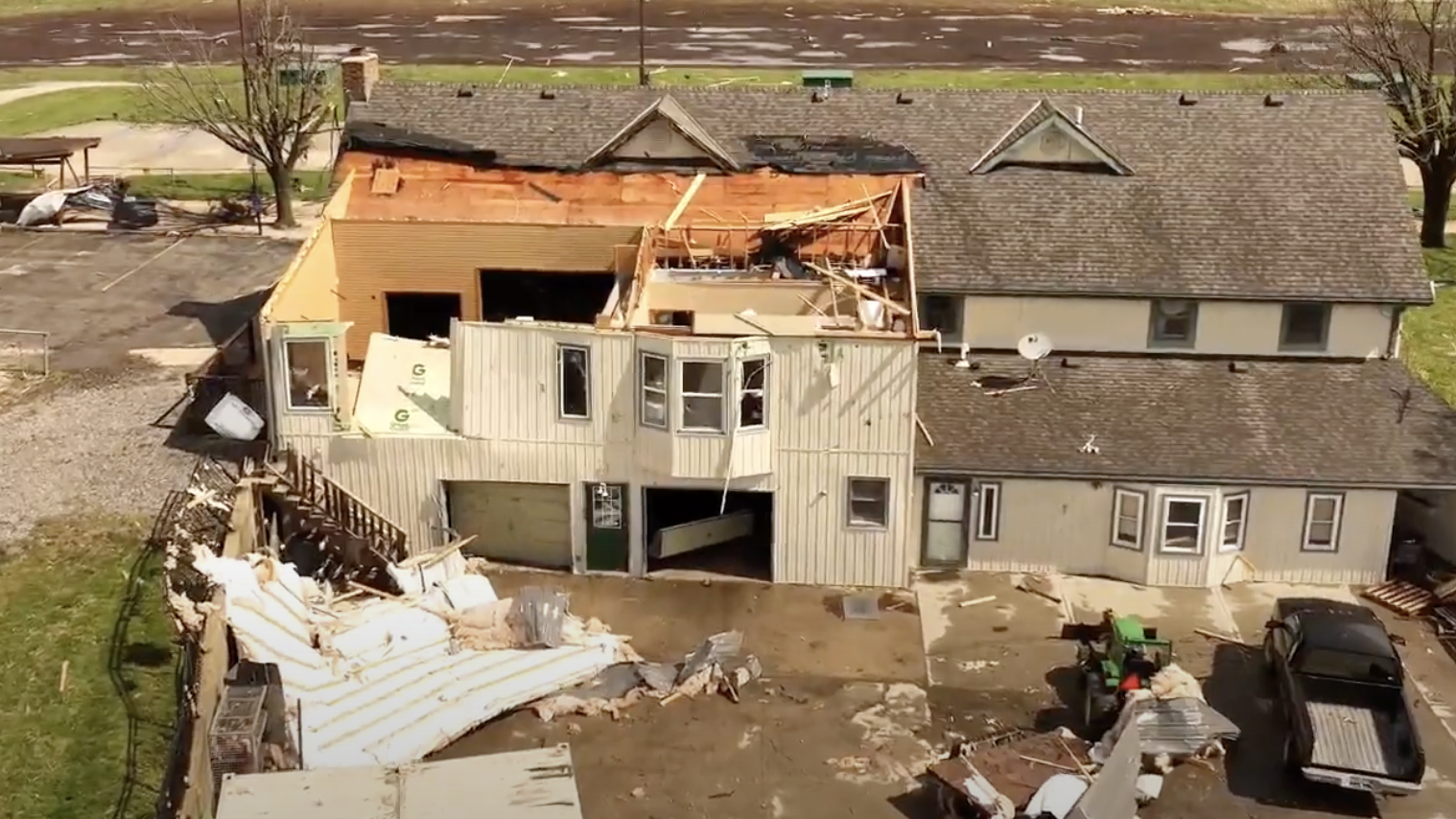
The U.S. suffered its second billion-dollar weather disaster of 2012 on April 3, when a massive hailstorm and 21 tornadoes hit the Dallas/Fort Worth, Texas region, said insurance company Aon Benfield, in their latest monthly Global Catastrophe Recap Report. They put the damage at $1 billion. The tornado outbreak included one EF-3 twister, which hit Forney, Texas. A severe hailstorm during the outbreak hit the DFW airport, damaging over 100 airplanes, and forcing the temporary closure of the airport. The other billion-dollar weather disaster of 2012 was the March 2 - 3 tornado outbreak in the Midwest and Southeast. NOAA put the total cost of the tornadoes that killed 41 people in Kentucky, Indiana, Ohio, and Alabama during the outbreak at $1.5 billion. There were two EF-4 tornadoes, one which devastated Henryville, Indiana, and another that plowed through Crittenden, Kentucky. On average, the U.S. sees 3 - 4 billion-dollar weather disasters each year, with 1 - 2 of these being severe weather/tornado outbreaks. In 2011, we already had five billion-dollar weather-related disasters by the first week of May, so we are well behind last year's pace. NOAA's National Climatic Data Center logged a record fourteen billion-dollar weather disasters in 2011. There has been just one other billion-dollar disaster in the world this year, according to Aon Benfield--severe flooding in Australia's New South Wales and Victoria states in late February and early March that caused $1.58 billion in damage. A separate flooding episode in late January and early February came close, causing an additional $920 million in damage in Australia.

Figure 1. The EF-3 tornado that hit Forney, Texas, on April 3, 2012. Image credit: wunderphotographer ClockworkLemon
Video 1. Dramatic video of semi-trailers being tossed more than 100 feet in the air by the Lancaster, Texas tornado of April 3, 2012.

Canada and Midwest U.S. frost/freeze damage in the hundreds of millions of dollars
Damage to fruit trees in Ontario, Canada due to a series of frosts and freezes over the past six weeks will easily top $100 million dollars, said the Windsor Star this week. About 80% of the Ontario apple crop was wiped out. At the Ann Arbor Farmer's Market yesterday, I talked to a local apple grower who told me that her orchard in Southeast Lower Michigan had suffered at least a 90% loss of its apple crop. She said the story was similar for all the growers of apples, pears, peaches, nectarines, grapes, cherries, and plums in Michigan. "The only year that can compare was 1945," she told me, "and that year wasn't nearly as bad as 2012." Fruit crops in Pennsylvania and New York State have suffered heavy damage as well, and the total damage to agriculture from this year's freezes will likely be in the hundreds of millions of dollars. All of this damage occurred despite the fact that April temperatures across the region were above average. The culprit was the extraordinary "Summer in March" weather in mid-March 2012, which brought a week of 80°F-plus temperature to the region that triggered a record early bloom.

Figure 2. Morning satellite image of Eastern Pacific Invest 90E.
Hurricane season is coming
It's now mid-May, which means that hurricane season is about to start in the East Pacific. The official start of the East Pacific hurricane season is May 15, and the action is already starting to heat up. The first "Invest" of 2012 in the East Pacific, Invest 90E, is located about 700 miles south of Puerto Vallarta, Mexico, and is moving westward out to sea, posing no threat to any land areas. The European Center model predicts the possibility of another system getting organized in the East Pacific, closer to the coast of Mexico, during the period Wednesday - Friday (May 16 - 18.)
In the Atlantic, where hurricane season officially starts on June 1, the action may also be about to heat up. For the past several days, the GFS model has been consistently predicting the development of a subtropical storm in the Western Caribbean, or waters near Florida, sometime May 19 - May 21. The European Center model has not been on board with this, but has been predicting a very moist flow of tropical air will develop, bringing heavy rains to Florida May 19 - 20. So, it is possible we will see the Atlantic's first named storm occur in May this year, but the models are very unreliable this far out.
Have a great weekend, everyone!
Jeff Masters
Tornado that hit Royse City 4/3/12
Hail from tornados. April storms 2012
Reader Comments
Page: 1 | 2 | 3 | 4 | 5 | 6 | 7 | 8 | 9 | 10 | 11 | 12 | 13 | 14 | 15 | 16 | 17 | 18 | 19 | 20 — Blog Index
Wonder if the NHC will say anything at 2:00. The NHC needs to consider naming this storm.
Things are warming up fast hydrus!
I don't give it much chance, unless it moves South.
ehh, not just yet, i imagine they want to see it "FULLY" detatch from the frontal boundary(Which it almost has), and for it to Transition at least into a shallow warm-core storm before deciding to mention it. If the system can do these things by tomorrow morning, I imagine with the timing and such, we could could get Alberto to form and last for about 48 hours before swinging back around toward Europe.
TWDAT
TROPICAL WEATHER DISCUSSION
NWS NATIONAL HURRICANE CENTER MIAMI FL
805 AM EDT SAT MAY 12 2012
TROPICAL WEATHER DISCUSSION FOR NORTH AMERICA...CENTRAL
AMERICA...GULF OF MEXICO...CARIBBEAN SEA...NORTHERN SECTIONS OF
SOUTH AMERICA...AND ATLANTIC OCEAN TO THE AFRICAN COAST FROM THE
EQUATOR TO 32N. THE FOLLOWING INFORMATION IS BASED ON SATELLITE
IMAGERY...WEATHER OBSERVATIONS...RADAR...AND METEOROLOGICAL
ANALYSIS.
BASED ON 0600 UTC SURFACE ANALYSIS AND SATELLITE IMAGERY THROUGH
1015 UTC.
...ITCZ/MONSOON TROUGH...
THE MONSOON TROUGH EXTENDS ACROSS AFRICA INTO THE E TROPICAL
ATLC NEAR 11N16W TO 6N17W WHERE THE ITCZ CONTINUES ALONG 5N23W
6N30W TO INLAND OVER SOUTH AMERICA NEAR 1N51W. CLUSTERS OF
SCATTERED MODERATE/ISOLATED STRONG CONVECTION ARE FROM 3N-10N
BETWEEN 10W-17W. SMALL CLUSTERS OF SCATTERED MODERATE CONVECTION
ARE WITHIN 60/90 NM EITHER SIDE OF THE ITCZ BETWEEN 27W-35W AND
WITHIN 60 NM N OF THE ITCZ BETWEEN 40W-44W.
...DISCUSSION...
GULF OF MEXICO...
AN UPPER RIDGE IS THE DOMINATING THE GULF WITH THE AXIS
EXTENDING FROM AN UPPER HIGH INLAND OVER HONDURAS ACROSS THE
YUCATAN PENINSULA TO NE FLORIDA CONTINUING OVER NORTH CAROLINA.
AN UPPER LOW IS OVER E OKLAHOMA WITH AN UPPER TROUGH EXTENDING S
TO OVER TEXAS MOVING TOWARD THE LOWER MISSISSIPPI VALLEY. UPPER
DIFFLUENCE BETWEEN THESE UPPER LEVEL FEATURES ARE GENERATING
SCATTERED SHOWERS/ISOLATED THUNDERSTORMS N OF 26N TO INLAND OVER
THE N GULF COAST BETWEEN 84W-91W. A STATIONARY FRONT EXTENDS
FROM A 1013 MB LOW OVER E TEXAS JUST N OF CORPUS CHRISTI ALONG
THE TEXAS AND LOUISIANA COAST INTO THE N GULF TO NEAR 30N87W
WITH SCATTERED SHOWERS/ISOLATED THUNDERSTORMS WITHIN 45 NM ALONG
THE COAST OF TEXAS N OF 29N. THE UPPER FLOW IS DRAWING SCATTERED
SHOWERS AND POSSIBLE ISOLATED THUNDERSTORMS WITHIN 150 NM OF
LINE FROM OVER MEXICO NEAR TUXPAN TO 25N87W. THE UPPER LEVEL
RIDGE WILL GRADUALLY SHIFT EASTWARD THROUGH TONIGHT. A WEAK
FRONTAL BOUNDARY WILL MOVE OFF THE TEXAS COAST LATER THIS
MORNING AND DRIFT E ACROSS THE N GULF THROUGH LATE MON.
CARIBBEAN SEA...
AN UPPER RIDGE OVER THE GULF OF MEXICO COVERS THE CARIBBEAN TO
70W AND IS ANCHORED BY AN UPPER HIGH INLAND OVER HONDURAS. THE
UPPER TROUGH OVER THE W ATLC EXTENDS S OVER THE E CARIBBEAN E OF
70W. FRESH TO STRONG EASTERLY TRADE WINDS ARE USHERING IN LOW
LEVEL MOISTURE WITH SCATTERED SHOWERS AND POSSIBLE ISOLATED
THUNDERSTORMS W OF 70W WITH PATCHES OF HAZE BEING REPORTED OVER
THE WINDWARD ISLANDS. THE TRADE WINDS ARE BANKING LOW LEVEL
CLOUDS WITH SCATTERED SHOWERS/ISOLATED THUNDERSTORMS WITHIN 60
NM ALONG THE COAST OF PANAMA AND COSTA RICA. WATER VAPOR
SATELLITE IMAGERY SHOWS MODERATE SUBSIDENCE AND DRY STABLE AIR
OVER THE REMAINDER OF THE CARIBBEAN SUPPORTING FAIR WEATHER THIS
MORNING. W ATLC ATLC SURFACE RIDGE WILL ALLOW TRADE WINDS TO
PERSIST FROM THE W TROPICAL ATLC E OF THE WINDWARD ISLANDS AND
ACROSS THE CENTRAL CARIBBEAN THROUGH MID WEEK.
ATLANTIC OCEAN...
AN UPPER TROUGH IS OVER THE W ATLC BETWEEN 60W-75W EXTENDING S
OVER THE E CARIBBEAN AND SUPPORTING A COLD FRONT THAT ENTERS THE
W ATLC E OF BERMUDA NEAR 32N63W TO 28N69W WHERE IT BECOMES
STATIONARY AND DISSIPATES TO E OF THE BAHAMA ISLANDS NEAR
26N75W. A SURFACE TROUGH EXTENDS FROM 28N68W TO E OF THE TURKS
AND CAICOS NEAR 23N73W WITH SCATTERED SHOWERS/ISOLATED
THUNDERSTORMS WITHIN 120 NM E OF THE TROUGH. A SURFACE RIDGE IS
BUILDING W OF THE FRONT ANCHORED BY A 1025 MB JUST OFF THE NORTH
CAROLINA COAST. AN UPPER RIDGE IS JUST TO THE E OF THE UPPER
TROUGH PROVIDING DIFFLUENCE ALOFT TO GENERATE SCATTERED SHOWERS/
ISOLATED THUNDERSTORMS WITHIN 120/150 NM OF LINE FROM 20N63W
26N63W TO 31N61W. A BROAD SURFACE RIDGE COVERS THE CENTRAL ATLC
N OF 20N BETWEEN 35W-60W. AN UPPER LOW IS OVER THE E ATLC
CENTERED NEAR 34N31W SUPPORTING A DEEPENING 1009 MB LOW NEAR
32N32W WITH AN OCCLUDED FRONT EXTENDING N OF THE AREA AND A
SURFACE TROUGH ENTERING THE DISCUSSION AREA NEAR 32N24W
EXTENDING TO 25N27W. A JET STREAM IS TO THE E OF THE SURFACE
TROUGH WITH WINDS OF 80 TO 110 WITHIN 120/150 NM OF LINE FROM
25N35W TO BEYOND 32N23W. THE FIRST VISIBLE SATELLITE IMAGES SHOW
SAHARAN DUST COVERING THE TROPICAL ATLC MAINLY S OF 20N E OF
50W. W ATLC COLD FRONT WILL GLIDE INTO THE CENTRAL ATLC THROUGH
TONIGHT. HIGH PRESSURE WILL BE BUILDING E FROM THE CAROLINAS AND
WILL MAINTAIN MODERATE TO FRESH NE TO E WINDS MAINLY N OF 25N
THROUGH LATE SUN. A WEAK COLD FRONT WILL MOVE ACROSS THE SE
CONUS MON WITH A WEAK FRONTAL BOUNDARY MOVING OFF THE NE FLORIDA
COAST BY LATE WED.
FOR ADDITIONAL INFORMATION PLEASE VISIT
HTTP://WWW.HURRICANES.GOV/MARINE
$$
PAW
As far as eye goes it's probably just a gap in the convection as it attempts to spin up. Same thing happens with most deeper convective sub tropical systems (Sean for an example)
soooo....now what? the NHC will step in now?
Basically all it has to do now, is become warm-core.
A college student who is training to work for the NHC atm.
Easier said than done over those SSTs
What's his thoughts on the system(92L)
He doesn't say much about it other than that he is surprised about how quick it developed (maybe 50% chance of development if the organization holds together). He also wanted to add that there is only one person who is likely at work in the NHC right now which would contribute to the lack of a STWO.
Yeah, very true.
There's a saying in music: it's not just the notes that count, it's the silence between the notes. You'll understand the weather a lot better if you quit fixating on the storms. In fact, the most important thing that's happening in the weather these days is not the weather at all.
southwestern Perry County...
While everybody is talking about the tropics a tornado warning is in effect haha The Tropics have taken over
At 1212 PM CDT... a severe thunderstorm capable of producing a tornado
was located 8 miles northeast of Wiggins... or 13 miles northeast of
Perkinston... moving northeast at 20 mph.
Locations impacted include...
rural southwestern Perry County
Precautionary/preparedness actions...
Take cover now. For your protection move to an interior room on the
lowest floor of a sturdy building.
In addition to the tornado... this storm is capable of producing
damaging hail and destructive straight line winds.
Lat... Lon 3098 8912 3103 8907 3096 8901 3093 8899
3092 8899 3091 8907 3091 8914 3093 8914
time... Mot... loc 1715z 232deg 17kt 3096 8904
And why is that?!
We have 90E that is possibly going to form over the next couple of days(maybe), and a system in the Atlantic shouting "Hey! look at me! Im trying to form out here, if you wanna issue a statement or Name me! Im right here!"
Not half bad wind shear...
About 20 - 21 degrees celsius.
I'd say probably around 21C...
Gosh I hate these things.
I think they are probably waiting for the next model runs to see what cyclonephase shows. With a system like this the uncertainty is pretty high when it comes to subtropical or extratropical.
May 12, 2012 - 16:45 UTC
HOW DARE YOU BRING ANYTHING UN-TROPICS RELATED TO THE BLOG!!!!!1
I am, of course, joking, btw.
Did you notice a few days ago that the Sahara dust storm that was holding back tropical development had dispersed, allowing this storm to form. If you didn't, quit patting yourself on the back.
WHXX01 KWBC 121332
CHGHUR
TROPICAL CYCLONE GUIDANCE MESSAGE
NWS NATIONAL HURRICANE CENTER MIAMI FL
1332 UTC SAT MAY 12 2012
DISCLAIMER...NUMERICAL MODELS ARE SUBJECT TO LARGE ERRORS.
PLEASE REFER TO NHC OFFICIAL FORECASTS FOR TROPICAL CYCLONE
AND SUBTROPICAL CYCLONE INFORMATION.
ATLANTIC OBJECTIVE AIDS FOR
DISTURBANCE INVEST (AL922012) 20120512 1200 UTC
...00 HRS... ...12 HRS... ...24 HRS. .. ...36 HRS...
120512 1200 120513 0000 120513 1200 120514 0000
LAT LON LAT LON LAT LON LAT LON
BAMS 32.1N 30.7W 32.9N 30.2W 33.9N 30.2W 34.8N 30.5W
BAMD 32.1N 30.7W 34.7N 29.4W 36.3N 30.1W 37.0N 31.2W
BAMM 32.1N 30.7W 33.9N 29.7W 35.4N 30.2W 36.2N 31.1W
LBAR 32.1N 30.7W 34.1N 28.3W 37.0N 26.6W 39.2N 25.6W
SHIP 30KTS 32KTS 35KTS 36KTS
DSHP 30KTS 32KTS 35KTS 36KTS
...48 HRS... ...72 HRS... ...96 HRS. .. ..120 HRS...
120514 1200 120515 1200 120516 1200 120517 1200
LAT LON LAT LON LAT LON LAT LON
BAMS 35.1N 31.1W 34.7N 31.8W 34.3N 30.1W 34.5N 26.0W
BAMD 36.8N 32.4W 36.3N 30.9W 39.4N 25.8W 41.1N 21.4W
BAMM 36.2N 32.1W 35.5N 32.5W 36.6N 28.8W 38.0N 24.1W
LBAR 40.9N 24.6W 42.2N 28.5W 40.3N 29.8W 39.3N 21.7W
SHIP 35KTS 26KTS 18KTS 0KTS
DSHP 35KTS 26KTS 18KTS 0KTS
...INITIAL CONDITIONS...
LATCUR = 32.1N LONCUR = 30.7W DIRCUR = 75DEG SPDCUR = 9KT
LATM12 = 32.6N LONM12 = 32.4W DIRM12 = 175DEG SPDM12 = 10KT
LATM24 = 35.3N LONM24 = 31.1W
WNDCUR = 30KT RMAXWD = 20NM WNDM12 = 30KT
CENPRS = 1009MB OUTPRS = 1020MB OUTRAD = 300NM SDEPTH = M
RD34NE = 0NM RD34SE = 0NM RD34SW = 0NM RD34NW = 0NM
$$
NNNN
Very weird how it appears to be strengthening like a normal tropical system. Link
Why are you hating on our little amazing gift from the Atlantic? I'm very amused by this system, VERY.
What's up Levi...do you think that 92L will amount to anything more than an invest?
That tight circulation is AMAZING to me... It's doing wonders for this system... Keep on marching little 92L!
Very similar to Tropical Storm Grace in 2009.
This is where the issue with subjective tropical cyclone formation comes into play. If they named Grace, they might just have to name 92L. But then they might not just because it's outside of hurricane season where as Grace wasn't.
Viewing: 701 - 751
Page: 1 | 2 | 3 | 4 | 5 | 6 | 7 | 8 | 9 | 10 | 11 | 12 | 13 | 14 | 15 | 16 | 17 | 18 | 19 | 20 — Blog Index