Ida takes aim at the U.S. Gulf Coast
Hurricane Ida burst into the Gulf of Mexico as a Category 2 hurricane with 100 mph winds this afternoon, and is poised to deliver a solid blow to the U.S. Gulf Coast between Southeast Louisiana and the Florida Panhandle on Tuesday morning. Radar imagery out of Cancun reveals that Ida has retained its tight inner core this afternoon, with only limited rain bands affecting Mexico and western Cuba. Top winds at Cancun, Mexico today were only 15 mph, despite the fact that Ida passed just 60 miles east of the city. Infrared and visible satellite loops show little change in the intensity of Ida's heavy thunderstorms this afternoon, but the cloud pattern is beginning to become distorted due to strong upper-level winds from the southwest that are creating 20 - 25 knots of wind shear over the hurricane. Water vapor satellite imagery reveals a large area of dry air to the southwest of Ida, but this dry air has not yet intruded into Ida's core. The latest 5:30 pm EST vortex report from the Hurricane Hunters showed that the central pressure had risen 1 mb, to 977 mb, but that the surface winds were still near 100 mph. They noted that the eyewall was open to the east, a sign that Ida's inner core may be in trouble.

Figure 1. MODIS satellite image from NASA's Terra spacecraft, taken at 1:35 pm EST 11/08/09. Image credit: NASA.
The intensity forecast for Ida
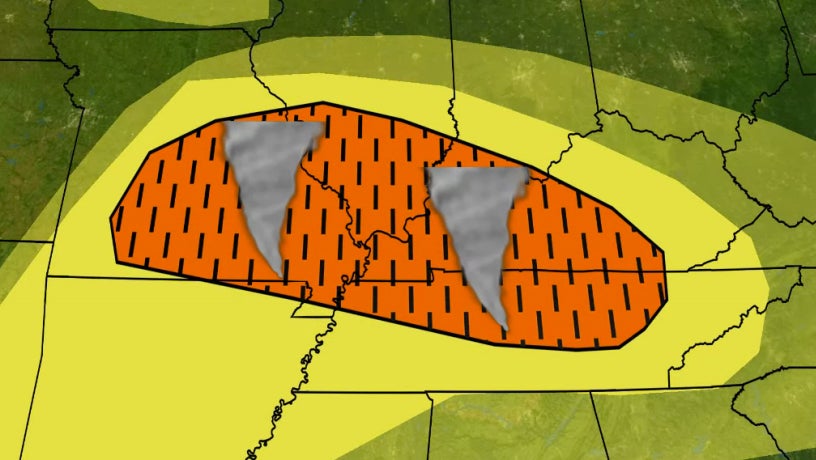
The high wind shear of 20 - 25 knots currently affecting Ida is forecast to persist at that level until Monday night. With the storm now beginning to show a distortion of the cloud pattern due to this shear, it would not be a surprise of the shear managed to inject some dry air into Ida's core Monday morning, significantly weakening the storm. Aiding this process will be cooler waters. Early Monday morning, Ida will be crossing over waters of 26°C, which is barely enough to support a hurricane. By Monday night, wind shear is expected to increase to 40 knots, which ordinarily would begin to tear the storm apart. This wind shear is due to an extratropical low pressure system over the western Gulf of Mexico, and this low will begin dumping cold, stable air into Ida Monday night through Tuesday. This will cause Ida to begin transitioning to an extratropical storm, and it is possible that during the transition Ida's winds will die down relatively slowly, despite the wind shear. The intensity forecast has a high amount of uncertainty, and I wouldn't be surprised at a landfall strength anywhere in the range of 45 mph - 80 mph. My personal best guess is a 50 - 60 mph tropical storm at landfall. Regardless of Ida's strength at landfall, the storm will be able to dump 4 - 8 inches of rain along the Gulf Coast, from New Orleans to Panama City. Isolated tornadoes will also be possible, primarily to the right side of Ida's track.

Figure 2. Maximum storm surge (depth of water above ground) for a Category 1 hurricane with 85 mph winds moving north-northeast at 15 mph. Ida is expected to be moving at this speed and direction at landfall, but will probably be weaker, so surges will not be this high. Image credit: NOAA SLOSH model run for Mobile Bay, 2008 version. Heights are given relative to the NAVD88 datum.
The storm surge forecast for Ida
Storm surge is the other major concern for Ida. With a strong high pressure system anchored over the U.S. today, the pressure difference between this high and Ida is creating a strong pressure gradient that will drive tides 3 - 5 feet above normal from New Orleans to the Florida Panhandle tonight. As Ida approaches on Monday, an additional rise in water will occur, and a large stretch of coast will be subject to very high water levels for an extended period of time. With battering waves building Monday afternoon into Tuesday morning, a significant coastal erosion event is shaping up. A particular concern is the western end of Alabama's Dauphin Island, where storm surges from four hurricanes over the past fifteen years have caused heavy damage to the low-lying heavily developed island. If Ida makes a direct hit on Mobile Bay as a Category 1 hurricane with 85 mph winds, a storm surge of up to six feet is possible there, assuming the storm hits at mean tide. The tidal range along the Gulf Coast varies by about 1.5 feet between low and high tide (Figure 3). High tide is near 2 am EST on Tuesday, but the official NHC forecast currently has the storm hitting between 6 am - 9 am, when the tide will be going out, so the storm may indeed be hitting at about mean tide.

Figure 3. The tide forecast for the Gulf Coast calls for high tide to occur around 2 am EST Tuesday morning. Ida is expected to hit later that morning, while the tide is going out.
I'll have an update Monday morning.
Links to follow:
U.S. Severe Weather Page
Cancun radar
Jeff Masters
Reader Comments
Page: 1 | 2 | 3 | 4 | 5 | 6 | 7 | 8 | 9 | 10 | 11 | 12 | 13 | 14 | 15 | 16 | 17 | 18 | 19 | 20 | 21 | 22 | 23 | 24 | 25 | 26 | 27 | 28 | 29 | 30 | 31 | 32 | 33 | 34 | 35 | 36 | 37 | 38 — Blog Index
Hey Alan, My son works at the yellowhammer Shell there @ DI. I imagine there gonna closed the bridge down. That's a high one. I go fishing over there off the pier during the summer sometimes. Nice to meet you. So what is your thoughts about Ida you think she's aiming for Mobile?
Sheri
Could be when the eye pokes out it may strengthen one more time.
Tropical storm conditions likely.
Trees....house up on blocks...shakes with 50+ mph winds...
I've have plenty of Hurricane days in my life, never had a half a day off from school. W/e interesting though.
driving in 70+mph winds is crazy and so are you for thinking it's not =P
LATEST ENHANCED WV ANMIN. IMAGE UP TO 926 PM EST FROM WEATHER TAP
Wind Direction (WDIR): E ( 80 deg true )
5-day plot - Wind Speed Wind Speed (WSPD): 29.1 kts
5-day plot - Wind Gust Wind Gust (GST): 36.9 kts
5-day plot - Wave Height Wave Height (WVHT): 13.8 ft
5-day plot - Dominant Wave Period Dominant Wave Period (DPD): 10 sec
5-day plot - Average Period Average Period (APD): 6.7 sec
5-day plot - Mean Wave Direction Mean Wave Direction (MWD): ESE ( 110 deg true )
5-day plot - Atmospheric Pressure Atmospheric Pressure (PRES): 29.87 in
5-day plot - Pressure Tendency Pressure Tendency (PTDY): +0.00 in ( Steady )
5-day plot - Air Temperature Air Temperature (ATMP): 80.6 °F
5-day plot - Water Temperature Water Temperature (WTMP): 80.2 °F
Here is a slightly Zoomed in Version maybe we can makeout some more details.
Trust me, a Category 1 landfall is nothing to sneeze at. Look at Katrina when it hit SFLA..
Note: The -24 degree C line (blue) of the GOES-12 water vapor channel (Ch3) is discussed in the Ph.D. Dissertation by Melvin F. Martin, Jr. available from the LSU Library.
Ongoing research performed by LSU Professor S.A. Hsu has further substantiated that this line also follows closely the K-index number of 28, indicating that thunderstorms are not likely within the drier (shaded) areas.
WOW!!!!!!yer kidding,,right
It looks like ida got a pulse.
On the course it's on it looks headed right for the mouth of the Mississippi.
Definitely do not see an eye ... could be wrong ..
Also keep in mind this is a sheared system and seeing its eye may or may not be indicative of strengthening. I'm sure under lighter shear conditions we'd have seen an eye but given the circumstances highclouds have blown over it frequently and if it's sheared to the point that the eye is visible it may be bad for Ida .. just a thought .. To me, Ida looks weaker. I could be wrong and only time will tell. I'm curious to see if the jet streak ventilates Ida as some have suggested tomorrow ...would be an interesting setup
Quoting stormsurge39:
Mobile county is hardcore! Ive got kids in school here and i dont see any reason to close Monday anywhere on the Gulf Coast.
WOW!!!!!!yer kidding,,right
yeah hardcore that's why 1/2 of Mobile floods during a regular rain storm.....you go with your hardcore self....at least i know my kids will be safe...
National Hurricane Survival Initiative
********************************************************
Before the Hurricane Begins
Develop a plan. Know your homes vulnerability to the threats above - surge, wind, and flooding. Check your supplies - water, batteries, food. For information on developing a Hurricane Supply kit, see our page on that topic. Know where you can evacuate to - friends, relatives, a hotel?
Know when to take action - Watch vs Warning
WATCH: Hurricane conditions are possible in the specified area of the WATCH, usually within 36 hours.
WARNING: Hurricane conditions are expected in the specified area of the WARNING, usually within 24 hours. Remember that there is no such thing as a "minor hurricane." Category 1 and 2 hurricanes still can do significant damage.
Prepare before a Watch or Warning is issued and be ready to evacuate when the Watch comes or earlier if so instructed.
An Approaching Storm
As a storm approaches, you should prepare your house and your yard. Some things to consider:
Turn down the temperature on your freezer and refrigerator as low as possible. This will buy you more time in the event of a power loss. 24 to 48 hours before will cool the food. Avoid opening them whenever possible. If you are evacuating.
Before you evacuate, call at least one person out of state to let them know your plans.
Ensure that your Hurricane Emergency Kit is fully stocked.
Charge electronic devices, for example, computers, cell phones, rechargeable batteries, razors, and the like.
Make extra ice, bag it - this will be useful to use and to keep the freezer cold.
If you have a generator, do NOT run it inside or near the house. But make sure you have fuel to run it.
Make sure your car has fuel.
Pick up yard debris - furniture, tools, decorative items, branches - anything loose that could become a missile. We have placed furniture in the pool upon occasion.
Secure boats, trailers, campers, RVs, and the like in the safest place you can find. Tie them down, anchor them, or however you can best secure them. But, take into account that there may be a storm surge.
Secure all doors and windows with locks, and shutters if available. Plywood, properly secured, can be effective. Don't forget your garage doors.
Move items that may be damaged by water to higher areas of your home if you can not take them with you if evacuating. Move them away from windows in case they are broken.
Huge items must even be secured in big storms. An engine block was found 40 or 50 feet up in a pine tree in the Homestead (actually Redlands) area after Andrew. Don't think that something is too big to be moved by the wind.
Re-check tie-downs.
Bring cars, bikes, scooters and anything like that into your garage if possible.
Bring in grills or other cooking items.
Bring in hoses, trash cans, hot tub covers, wind-chimes, plants.
Caulk and fill bathtubs - extra water comes in handy for toilets and more..
It may sound strange, but do your laundry, dishes, and take a shower. Why? Because if you lose power, having as much clean as possible will make a big difference.
Check if your pool pump should be on or off.
Close and fasten gates so they don't swing.
Close chimney flues.
Close/latch inside doors and cabinets.
If you have time, help your neighbors. Debris in their yards can easily impact your home and yard.
During a storm.
Stay inside, away from windows
Be alert for tornadoes
Stay away from flood waters and storm surge. It can be deceptively strong.
Be aware of the eye. It may be calm, but winds can and will pick up quickly and could catch you outside.
Un-plug electronic devices that are not in use to avoid surge damage.
After a Storm
Know power safety - avoid downed lines
Know food safety - what is good and for how long.
Chain saw safety is critical
Generator safety is important too
Water treatment - whether water needs to be boiled or not.
Listen to local officials
Use flashlights instead of candles
Inspect your home for damage.
Stay off roads as much as possible
You may need to super-chlorinate your pool
********************************************************
Yep.
agreed...been through two and while it isnt that bad it is bad enough, flooding, trees down, some roof damage. You dont need people driving ont he roads during a cat 1 hence the school closures.
I Hope thats wrong Ike.
Floater AVN Color Imagery Loop
Schools here are used as shelters. With coastlines being evacuated starting in the morning they need the schools. Because the district encompasses the whole county, they close them all because it creates a logistical nightmare otherwise.
Well now that I see Mobile Bay is on the West side I am off to the poker table.ya'll play nice and pray that the waves do not wash my car away. I am parked under the casino
what gave you the idea that mobile bay is out of the clear?? um it's still on the same path
Viewing: 651 - 701
Page: 1 | 2 | 3 | 4 | 5 | 6 | 7 | 8 | 9 | 10 | 11 | 12 | 13 | 14 | 15 | 16 | 17 | 18 | 19 | 20 | 21 | 22 | 23 | 24 | 25 | 26 | 27 | 28 | 29 | 30 | 31 | 32 | 33 | 34 | 35 | 36 | 37 | 38 — Blog Index