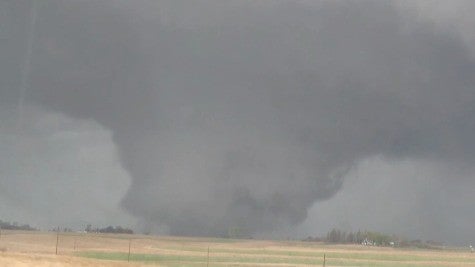
Not a trace of Don; What's next?
Don is dead
Tropical Storm Don, the fourth named storm of the 2011 season, made landfall near Baffin Bay, Texas yesterday evening around 10pm CDT in less-than-grand fashion. The storm was looking very weak for the 24 hours before landfall, but fizzled rapidly after landfall, and by early Saturday morning, there was barely a trace of the storm to show that it even existed in the first place.
NHC Hurricane Specialist Eric Blake probably said it best in this mornings 5am EDT discussion on the storm:
THE DON IS DEAD. THE CYCLONE LITERALLY EVAPORATED OVER TEXAS ABOUT
AS FAST AS I HAVE EVER SEEN WITHOUT MOUNTAINS INVOLVED. DON HAS NO
CONVECTION...MEAGER RAINFALL...AND ONLY A SLIGHT SIGNATURE IN
SURFACE OBSERVATIONS AND RADAR DATA. THEREFORE...THIS IS THE LAST
ADVISORY ON THIS SYSTEM.

Figure 1. Total precipitation accumulation for the storm, estimated by radar.
The heaviest rainfall was falling south of the storm's center yesterday, so it wasn't surprising that Brownsville saw the most rain, 0.63 inches. KBRO also recorded 18 mph wind gusts. But to the north of the center, where many of the media were located, not a drop of rain fell. Corpus Christi saw zero inches of rain, but did record gale-force wind gusts (39 mph). Harlingen, near Baffin Bay, and close to where the center made landfall, saw 0.20 inches of rain and 18 mph wind gusts. This storm did very, very little to relieve any drought conditions in Southern Texas. And so it continues.
What's next: Invest 91L continues to impress
Invest 91L, which is located near 12°N 48°W in the central Atlantic, continues to impress today, and has shown signs of more organization over the past 24 hours. 91L will probably develop into a tropical cyclone before it reaches the Lesser Antilles, so residents of these islands should remain watchful and prepared. Satellite loops show not only organized thunderstorm activity, but also the makings of a surface circulation. Something this wave has working against it right now is dry air—there's a large mass of Saharan air on the north and east sides of the system, which could at least prevent significant intensification. Also, University of Wisconsin CIMSS analysis shows some strong wind shear (30-40 knots) to the north of the wave. However, I don't expect this to prevent development of the wave. Wind shear out ahead of the system is relatively low (5-15 knots). Moisture is plenty high within the system, and sea surface temperatures are warm and toasty (28°C+) and will only get warmer as 91L moves west into the Caribbean.

Figure 2. Infrared satellite of invest 91L taken at 1:15pm EDT today.
Forecast for 91L
Most of the reliable forecast models (GFS, CMC, FIM, and the ECMWF) have come to agree that 91L will develop, however, they differ on how long-lived that will be. Some of the models are suggesting it will be a short-lived tropical cyclone, not making it out of the Caribbean alive, and some suggest that it will hold together and intensify as it moves north of the Caribbean islands. The forecast track for the system will most likely be to the northwest through the Caribbean, at which point it will take a northeast turn near the Bahamas, never reaching the U.S. coast. HWRF agrees with this track (and also brings the system to category 2 strength by August 3rd). However, there is still some uncertainty that the system could track west, south of the Caribbean islands, and potentially into the Gulf of Mexico. However, none of the models that suggest this solution actually show that the wave will be a tropical cyclone at that point.
The National Hurricane Center is giving this wave an 80% chance of developing into at least Tropical Depression Five over the next 48 hours. Chances are we will see Emily out of this system. A Hurricane Hunter mission is scheduled for tomorrow at 2pm EDT, but I wouldn't be totally surprised to see them call this system this evening, given the threat to the Lesser Antilles.
Watching a northwest Caribbean disturbance
A broad area of disturbed weather is producing some heavy thunderstorms in the northwest Caribbean, southeast of the Yucatan Peninsula. Little to no low-level circulation exists with this feature, and none of the models are picking up on it. The Hurricane Center has "blobbed" this item (as I like to say) with a "near 0%" chance of developing over the next 48 hours. This disturbance could cause major flooding in the region given the amount of thunderstorm activity, and predictability for systems like this (potential Bay of Cempeche tropical cyclones) is very low. Models have a short lead time on development, and they spin up very fast once they enter the Bay of Campeche given the favorable topography of the land surrounding it. The difference between this system, though, and one like Arlene, is that there is very, very little low level circulation already present. Pre-Arlene was a bit more organized before it crossed the Yucatan, and so it's hard to imagine that this disturbance will be able to hold together, should it get that far.
If 91L develops, I'll be back tomorrow with a post.
Angela
Reader Comments
Page: 1 | 2 | 3 | 4 | 5 | 6 | 7 | 8 | 9 | 10 | 11 | 12 | 13 | 14 | 15 | 16 | 17 | 18 | 19 | 20 | 21 | 22 | 23 | 24 | 25 | 26 | 27 | 28 | 29 | 30 | 31 | 32 | 33 | 34 | 35 | 36 | 37 | 38 | 39 | 40 | 41 | 42 | 43 | 44 | 45 | 46 | 47 | 48 | 49 | 50 | 51 | 52 | 53 | 54 | 55 | 56 | 57 | 58 | 59 | 60 | 61 | 62 | 63 | 64 | 65 | 66 | 67 | 68 | 69 | 70 | 71 | 72 | 73 | 74 | 75 | 76 | 77 | 78 | 79 | 80 | 81 | 82 | 83 | 84 | 85 | 86 | 87 | 88 | 89 | 90 | 91 | 92 | 93 | 94 | 95 | 96 | 97 | 98 | 99 | 100 | 101 | 102 | 103 | 104 | 105 | 106 | 107 | 108 | 109 | 110 | 111 | 112 | 113 | 114 | 115 | 116 | 117 | 118 | 119 | 120 | 121 | 122 | 123 | 124 | 125 | 126 | 127 | 128 | 129 | 130 | 131 | 132 | 133 | 134 | 135 | 136 | 137 | 138 | 139 — Blog Index
of course this could stay off the outer banks like Hurricane Betsy did.
ohey Kori.
If the NHC dropped and raised percentages based on diurnal impacts or frame by frame judgements like some on here they would look like fools, because their percentages would go up and down all the time
agreed, but it will probably be not too far off the coast. Do you see a total recurve out to sea?
Which one? Seen more than one that fit the bill tonight.
Hurricane Hugo when he was near 91L's coordinates...
09/14 18 GMT 13.6 49.1 105 970 Category 2 Hurricane
lol seriously. This blog makes me laugh sometimes.
Uhhh.... The POOFcaster who says 20% @ 2 I may put him on Ignore
Yo.
Proof is only found in mathematics, mate. ;)
It makes me shake my head even more
Are you trying to confuse people or "forecast"?
I already did. Sad, because I've only got 3 now on there.
I know, I've seen much more disorganised features eventually make to hurricane status .
Absolutely, and it's never a bad idea to have at least SOME preparations made during this time of year especially if you live in a region prone to tropical cyclones. And yes, I too smell a troll.
91L was still attached to the ITCZ yesterday which allowed for the system to maintain itself during the diurnal minimum. Now that the system is not receiving any support from the ITCZ, it should be expected that the system is weakening convectively.
Expect convection to continue to fire as the night progresses.
I have poofed you over this statement.
Thinking the Glenfidich and Beefeater models are in control tonight.
I'm a newbie. I was wondering the same.
Maybe both. ;) ;)
Do you have a rebuttal?
They issues advisories at 5 and 11 am and pm EDT. But yes, I agree, TD by 11 am :)
LOL on that last line
Dmax - Occurs on Sunrise when Convection of a wave is increasing
The cycles will not affect TS or Hurricanes
91L still looks primed for development. Dmin and some dry air entrainment are responsible for the current lack of convection (which, by the way, is returning to the center even now). 96E also appears likely to become a TD tomorrow, and possibly TS Eugene.
I agree. Circulation has been ripped apart right in the middle of the old center from south west to north east (it's appearance is not only due to dmin!). Maybe 95L will regain new structure on either side. But it will take some time. Models will have to calculate new runs.
Viewing: 1251 - 1301
Page: 1 | 2 | 3 | 4 | 5 | 6 | 7 | 8 | 9 | 10 | 11 | 12 | 13 | 14 | 15 | 16 | 17 | 18 | 19 | 20 | 21 | 22 | 23 | 24 | 25 | 26 | 27 | 28 | 29 | 30 | 31 | 32 | 33 | 34 | 35 | 36 | 37 | 38 | 39 | 40 | 41 | 42 | 43 | 44 | 45 | 46 | 47 | 48 | 49 | 50 | 51 | 52 | 53 | 54 | 55 | 56 | 57 | 58 | 59 | 60 | 61 | 62 | 63 | 64 | 65 | 66 | 67 | 68 | 69 | 70 | 71 | 72 | 73 | 74 | 75 | 76 | 77 | 78 | 79 | 80 | 81 | 82 | 83 | 84 | 85 | 86 | 87 | 88 | 89 | 90 | 91 | 92 | 93 | 94 | 95 | 96 | 97 | 98 | 99 | 100 | 101 | 102 | 103 | 104 | 105 | 106 | 107 | 108 | 109 | 110 | 111 | 112 | 113 | 114 | 115 | 116 | 117 | 118 | 119 | 120 | 121 | 122 | 123 | 124 | 125 | 126 | 127 | 128 | 129 | 130 | 131 | 132 | 133 | 134 | 135 | 136 | 137 | 138 | 139 — Blog Index