Top ten global weather events of 2011
A remarkable blitz of extreme weather events during 2011 caused a total of 32 weather disasters costing at least $1 billion worldwide. Five nations experienced their most expensive weather-related natural disasters on record during 2011--Thailand, Australia, Colombia, Sri Lanka, and Cambodia. According to insurance broker AON Benfield's November Catastrophe Report, the U.S. was hit by no less than seventeen punishing multi-billion dollar extreme weather disasters in 2011; NOAA's National Climatic Data Center official total is lower--twelve--but is likely to grow in number as additional damage statistics are tallied. Brazil experienced its deadliest weather-related natural disaster--a flash flood that killed 902 people in January, and the Philippines had its second deadliest flood ever, when Tropical Storm Washi killed over 1200 people in December.


It was difficult to pick a top ten list of top weather events of 2011 from this bewildering list of candidates, and I cheated a bit by giving a tie for tenth place, so that eleven events would make the list. My list of top weather events were chosen based on their impact to society and meteorological significance. Damage estimates and death tolls for the 2011 disasters were mostly taken from AON Benfield's November Catastrophe Report, and records for damages and death tolls from disasters in previous years was taken from the Centre for Research on the Epidemiology of Disasters (CRED.) Here, then, is this year's top ten list. I've included links to some of my blogs posts made at the time of the disaster.
1) East Africa drought and famine: over 30,000 dead
The deadliest weather disaster of 2011 was a quiet one that got few headlines--the East African drought in Somalia, Kenya, and Ethiopia. On July 20, the United Nations officially declared famine in two regions of southern Somalia, the first time a famine has been declared by the UN in nearly thirty years. Almost 30,000 children under the age of five were believed to have died of malnutrition in Somalia this summer, and the total death toll of this great drought is doubtless much higher. East Africa has two rainy seasons--a main "long rains" of March - June, and the "short rains" of October - November. The "short rains" failed in the fall of 2010, and when the main "long rains" in spring 2011 also failed, it brought one of the worst droughts in recorded history. The 2010 - 2011 drought was rated along with the droughts of 1983 - 1984 and 1999 - 2000 as one of the three most significant droughts of the past 60 years. It was the driest 12-month period on record at some locations in East Africa. Damage assessments from the drought are not yet available, but it would not be a surprise if the drought of 2011 was the costliest weather-related natural disaster on record for Somalia, Ethiopia, and Kenya.
December 20 post: Deadliest weather disaster of 2011: the East African drought

Figure 1. Children fetch water at a tap installed by the International Rescue Committee (IRC) in the village of Darssalam in central Somalia. Image credit: IRC.
2) Thailand flooding: most expensive natural disaster in Thai history
Heavy monsoon and tropical cyclone rains from July through October, enhanced by La Niña conditions, led to unprecedented flooding that killed 657 people and caused Thailand's most expensive natural disaster in history. Damages are now estimated at $45 billion by re-insurance company AON Benfield. This is 18% of the country's GDP. Hurricane Katrina cost the U.S. about 0.7% of its GDP, so the Thailand floods can be thought of as a disaster 25 times worse than Katrina for that country. Thailand's previous most expensive natural disaster was the $1.3 billion price tag of the November 27, 1993 flood, according to the Centre for Research on the Epidemiology of Disasters (CRED). The floodwaters this year have hit 83% of Thailand's provinces, affected 9.8 million people, and damaged four million structures and approximately 25% of the nation's rice crop. Thailand is the world's largest exporter of rice, accounting for 30% of the global total, and the flood has helped trigger an increase in world rice prices in late 2011.
November 14 post: Thailand's flood gradually subsiding; climate change increasing Thai flood risk

Figure 2. An SH-60F Sea Hawk helicopter assigned to Helicopter Anti-Submarine Squadron (HS) 14, flies around the Bangkok area with members of the humanitarian assessment survey team and the Royal Thai Armed Forces to assess the damage caused by the 2011 floods. Image credit: Petty Officer 1st Class Jennifer Villalovos
3) Queensland, Australia flooding: most expensive natural disaster in Australian history
Heavy rains from December 2010 through January 2011, enhanced by La Niña conditions and record-warm ocean temperatures, led to unprecedented rains and flooding that killed 35 people and did $30 billion in damage. This was 3.2% of Australia's GDP, and five times more costly than the nation's previous most expensive natural disaster in history, the 1981 drought ($6 billion.) Rainfall in Queensland and all of eastern Australia in December 2010 was the greatest on record, and the year 2010 was the rainiest year on record for Queensland.
January 21 post: 2011: Year of the Flood

Figure 3. Still frame from a remarkable 6-minute YouTube video showing the sad fate of a row of parked cars when a flash flood in Toowoomba, Queensland sweeps away dozens of the cars. A note to the wise: Two minutes into the video, we see a man enter the flash flood to save his car. He is successful, but his actions were extremely risky--most flash flood deaths occur when cars with people inside get swept away.
4) Columbia floods: most expensive natural disaster in Colombia's history
Heavy rains in Colombia reached their peak in late April, triggering floods that killed 116 and did $5.85 billion in damage (2% of their GDP), making it the most damaging natural disaster in Colombia's history. Colombian President Juan Manuel Santos warned: “There are going to be a lot of needy people, there has never been a tragedy of this scale in our history.” Colombia's previous most expensive weather disaster occurred just last year, when the heaviest rains in 42 years of record keeping occurred. Floods and landslides killed 528, did $1 billion in damage, and left 2.2 million homeless in 2010. Colombia's most expensive natural disaster prior to 2011 was the $1.9 billion in damage from the January 25, 1999 earthquake, according to CRED.
5) Tropical Storm Washi: second deadliest weather disaster in Philippine history
Tropical Storm Washi hit the southern Philippine island of Mindanao as a tropical storm with 45 - 55 mph winds, crossing the island in about eighteen hours on December 16. Washi was unusually wet, as the storm was able to tap a large stream of tropical moisture extending far to the east, and drew moisture from an area where sea surface temperatures were nearly 1°C above average--one of the top five warmest values on record. Washi's rains fell on regions where the natural forest had been illegally logged or converted to pineapple plantations, and the heavy rains were able to run off quickly on the relatively barren soils and create devastating flash floods. Since the storm hit in the middle of the night, and affected an unprepared population that had no flood warning system in place, the death toll was tragically high. At least 1249 people perished, and 79 people are still listed as missing. The only deadlier storm ever to hit the Philippines was Tropical Storm Thelma on November 5, 1991, which killed 5956 people.
December 19 post: Tropical Storm Washi kills 632 in the Philippines

Figure 5. MODIS true-color satellite image of Tropical Storm Washi at 01:45 UTC December 16, 2011, as it bore down on the Philippines. At the time, Washi had top sustatined winds of 50 mph. Image credit: NASA.
6) Brazil flash flood kills 902: deadliest natural disaster in Brazil's history
Brazil suffered its deadliest natural disaster in history on January 11, when torrential rains inundated a heavily populated, steep-sloped area about 40 miles north of Rio de Janeiro. Flash floods and mudslides from the heavy rains have claimed 902 lives, including at least 357 in Nova Friburgo and 323 in Teresópolis. Rainfall amounts of approximately 300 mm (12 inches) fell in just a few hours in the hardest-hit regions. Damage estimates are $1.2 billion, making it the most damaging storm in Brazil's history, and third most damaging natural disaster, behind the $2.3 billion and $1.7 billion price tags of the 1978 and 2004 droughts. The previous deadliest flood in Brazilian history was a January 23, 1967 flood that killed 785 people.
January 14 post: At least 611 dead in Brazilian floods: Brazil's deadliest natural disaster in history

Figure 6. Flooded stream in Teresópolis. Image credit: Wikipedia.
7) April 25 - 28 Super" tornado outbreak kills 321 in the U.S.
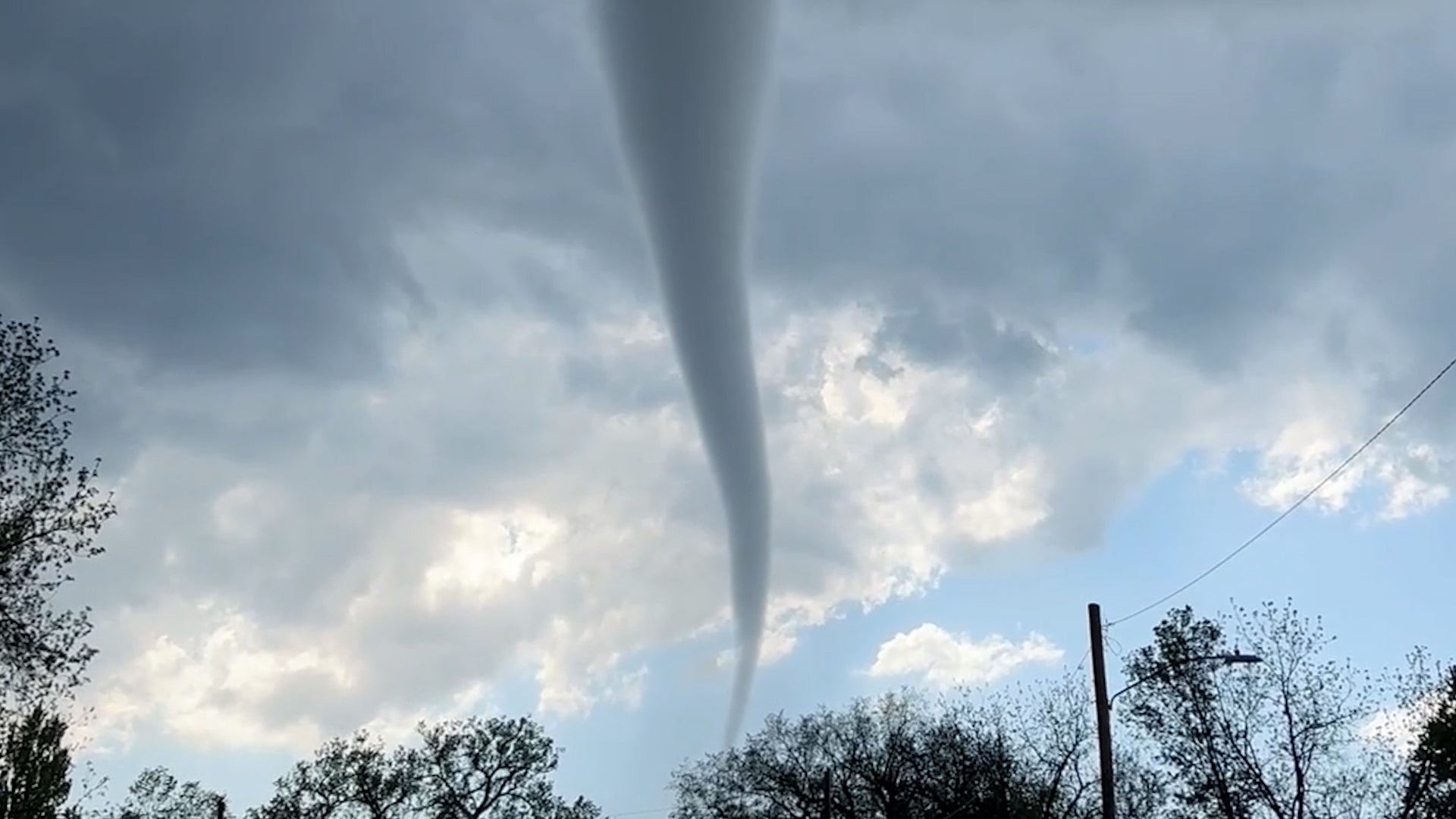
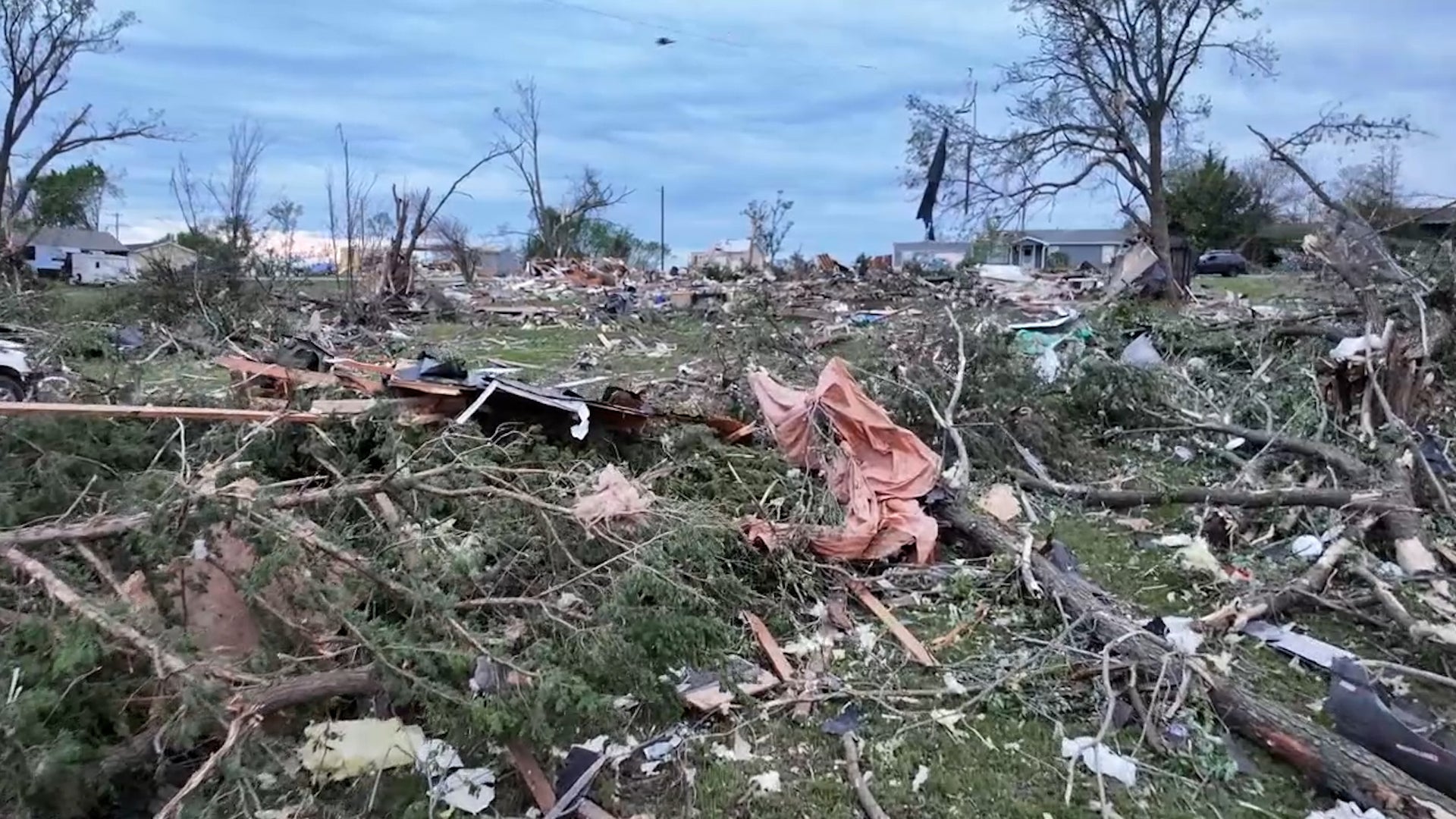
On April 25 - 28, 2011, a massive tornado outbreak clobbered the Midwest and Southeast U.S. with 343 tornadoes. Now called the April 2011 Super tornado outbreak, it was the largest and most damaging tornado outbreak in U.S. history. The tornadoes caused 321 deaths, with 240 of those occurring in Alabama. The deadliest tornado of the outbreak, an EF-5, hit northern Alabama, killing 78 people. Several major metropolitan areas were directly impacted by strong tornadoes including Tuscaloosa, Birmingham, and Huntsville in Alabama and Chattanooga, Tennessee, causing the estimated damage costs to soar. The outbreak caused more than $7.3 billion insured losses and total losses greater than $10.2 billion.
April 29 post: Over 300 dead in historic tornado outbreak; one violent EF-5 tornado confirmed

Figure 7. The Piggly Wiggly supermarket and Family Dollar store after the EF-5 Hackleburg, Alabama tornado on April 27. Image credit: NWS Birmingham, Alabama.
8) Southern U.S./Northern Mexico drought: $10 billion in damage, and rising
Drought and excessive heat created major impacts across Texas, Oklahoma, New Mexico, Arizona, southern Kansas, western Louisiana, and northern Mexico. Texas endured its driest 1-year period on record, and rainfall in much of northern Mexico was the lowest since record keeping began in 1941. Texas had the hottest summer ever recorded by a U.S. state, and Oklahoma had the hottest month (July) any U.S. state has ever recorded. The total direct losses to crops, livestock and timber are estimated at $10 billion, but are expected to continue to rise as the drought continues into 2012. Record fires across the region caused an additional $1 billion in damage.
August 17 post: Texas heat wave smashes more records

Figure 8. Business was slow at the Lake Conroe, Texas jet ski rental in 2011, thanks to the great Texas drought of 2011. Image credit: wunderphotographer BEENE.
9) Pakistan floods: 2nd most expensive weather disaster in Pakistani history
Heavy rains during the July through September monsoon season triggered devastating flooding that killed 456 and did $2 billion in damage (1.1% of GDP) in Pakistan. It was the second most expensive weather-related disaster in Pakistan's history, behind the $9.5 billion price tag of the 2010 floods (5.5% of GDP.)
10 (tie) Hurricane Irene: most damaging tropical cyclone of 2011
The most damaging tropical cyclone on the globe during 2011 was Hurricane Irene, which plowed through the Bahama Islands as a Category 3 hurricane with 120 mph winds before striking North Carolina as a Category 1 hurricane with 85 mph winds on August 27. Most of Irene's damage occurred after it made landfall on Long Island, New York as a tropical storm with 65 mph winds, when torrential rainfall triggered extreme flooding in the Northeast U.S. More than 7 million homes and businesses lost power during the storm. Irene caused at least 45 deaths in the U.S., and ten in the Caribbean and Bahamas. Damage is estimated at $7.3 billion.
December 3 post: Hurricane Irene: New York City dodges a potential storm surge mega-disaster

Figure 9. GOES-East visible satellite image of Irene taken at 7:45 am EDT on Sunday, August 28, 2011. At the time, Irene was a tropical storm with 65 mph winds, making landfall on Long Island, New York. Image credit: NOAA Environmental Visualization laboratory.
10 (tie) May 22 - 27 Joplin, Missouri tornado outbreak
A violent EF-5 tornado carved a ½ – ¾ mile-wide path of devastation through Joplin, Missouri on May 22, killing 158, and causing $3 billion in damage. Huge sections of the town virtually obliterated, and damage from the tornado was so severe that pavement was ripped from the ground. It was the largest death toll from a U.S. tornado since 1947, seventh deadliest tornado in U.S. history, and the most expensive tornado in world history. The six-day outbreak spawned 180 tornadoes in the central and southern states, killed 177, and did $9.1 billion in damage.
May 23 post: Deadliest U.S. tornado since 1953 rips through Joplin, Missouri, killing 89
Video 1. Video of the Joplin, Missouri tornado of May 22, 2011, entering the southwest side of town. Filmed by TornadoVideos.net Basehunters team Colt Forney, Isaac Pato, Kevin Rolfs, and Scott Peake. The most remarkable audio I've ever heard of people surviving a direct hit by a violent tornado was posted to Youtube by someone who took shelter in the walk-in storage refrigerator at a gas station during the Joplin tornado. There isn't much video.
Honorable mentions:
1) Sri Lanka: Heaviest rains in nearly a century of record keeping triggered a 1-in-100 year flood in January that killed 43 and did $500 million in damage--the costliest weather-related disaster in Sri Lanka's history. Renewed rains February 1 - 10 caused flooding that killed 18 and cost an additional $450 million--the second most costly natural disaster in Sri Lanka's history.
2) Heavy rains in September and October in Cambodia triggered flooding that killed 250 and did $521 million in damage--by far the most expensive natural disaster in Cambodian history. The previous most expensive disaster was the $160 million cost of floods in July 2000.
3) El Salvador: Heavy rains from Tropical Depression 12-E in October triggered flooding that killed 140 in Central America and caused $900 million in damage to El Salvador (4.2% of GDP). This is the 2nd most expensive weather-related disaster in El Salvador's history, behind the $939 million price tag of their Nov. 7, 2009 flood.
4) China: June floods in China killed 239, doing $6.65 billion in damage, the 10th most damaging weather-related disaster in Chinese history.
5) China: September floods killed 101 and did $4.25 billion in damage.
6) U.S.: Greatest flood on the Lower Mississippi River on record caused $4 billion in damage.
7) China: A drought in Northern China during January through April cost $2.7 billion.
8) Denmark: Severe flooding on July 2 - 3 caused $1 billion in damage, the 3rd most expensive weather-related disaster in Danish history.
Other posts looking back at the remarkable weather events of 2011
2011: Year of the Tornado
Deadliest weather disaster of 2011:; the East African drought
Tropical Storm Lee's flood in Binghamton: was global warming the final straw?
Wettest year on record in Philadelphia; 2011 sets record for wet/dry extremes in U.S.
Hurricane Irene: New York City dodges a potential storm surge mega-disaster
Donations sought for the East Africa famine
Weather Underground has partnered with the International Rescue Committee (IRC) to help the Horn of Africa region during the ongoing famine. With the help of the Weather Underground community, we hope to raise $10,000 that will go toward helping the refugees survive the crisis. Weather Underground will match the community's donation dollar-for-dollar up to $10,000 for a total donation of $20,000. Please visit the East Africa famine donation page to help out. Ninety cents of every dollar donated goes directly to the people in need.
This will be my last post until Tuesday, as its time to gather with family and friends and celebrate the arrival of the new year. Happy New Year, everyone!
Jeff Masters
Reader Comments
Page: 1 | 2 | 3 | 4 | 5 | 6 | 7 | 8 | 9 | 10 | 11 | 12 | 13 | 14 | 15 | 16 | 17 | 18 | 19 | 20 | 21 | 22 | 23 — Blog Index
Battery acid? Electric cars do not use wet cells that contain battery acid.
Link
Isn't there another blog for those who don't understand science and don't want to understand science?
I suppose you've never been in a car fire.
I have.
We have about 800 car fires each day in the US of A.
LOL +1
Comparing nations can be misleading, given their vastly varied sizes and populations. To get a more meaningful picture, it's essential also to consider emissions on a per-person basis. From this perspective, the list is topped by small countries with energy-intensive industries such as Qatar and Bahrain, and the large developing nations such as India and China look significantly less polluting. Here's a selection of countries and their per-person CO2 emissions from burning fossil fuels:
Australia: 19.6 tonnes
United States: 17.7 tonnes
Russia: 11.2 tonnes
Germany: 9.3 tonnes
UK: 8.4 tonnes
China: 5.8 tonnes
World average: 4.5 tonnes
India: 1.4 tonnes
Africa average: 1.1 tonnes
Chad: 0.03 tonnes
See all countries
As with national emissions, this list would look different if all greenhouse gases were included.
Historical emissions
Since carbon dioxide added to the atmosphere can stay there for centuries, historical emissions are just as important – or even more important – than current emissions. The tricky question of historical responsibility is one of the key tensions in the process of negotiating a global climate deal. The following figures from the World Resources Institute show the top 10 nations as measured by their cumulative emissions between 1850 and 2007. The US tops the list by a wide margin.
1. US: 339,174 MT or 28.8%
2. China: 105,915 MT or 9.0%
3. Russia: 94,679 MT or 8.0%
4. Germany: 81,194.5 MT or 6.9%
5. UK: 68,763 MT or 5.8%
6. Japan: 45,629 MT or 3.87%
7. France: 32,667 MT or 2.77%
8. India: 28,824 MT or 2.44%
9. Canada: 25,716 MT or 2.2%
10. Ukraine: 25,431 MT or 2.2%
See all countries
Of course, it's also possible to look at historical emissions per person, which turns things around yet again. In this view, the UK shoots close to the top of the rankings, while China drops towards the bottom.
1. Luxembourg: 1,429 tonnes
2. UK: 1,127 tonnes
3. US: 1,126 tonnes
4. Belgium: 1,026 tonnes
5. Czech Republic: 1,006 tonnes
6. Germany: 987 tonnes
7. Estonia: 877 tonnes
8. Canada: 780 tonnes
9. Kazakhstan: 682 tonnes
10. Russia: 666 tonnes
See all countries
Consumption emissions
Imported and exported goods add another layer of complexity to the equation. Many commentators argue that focusing on where emissions are produced is unfair, because much of the carbon output of countries such as China are generated as a result of producing goods that are ultimately consumed in richer nations. If emissions are measured in terms of consumption rather than production (that is, each country's exports are excluded from its footprint, and its imports added) the tables turn yet again. The most widely cited international dataset for consumption emissions, from 2001, is rather out of date, but it still provides interesting insights. Here's the top 10 for consumption emissions per capita, including all greenhouse gases:
1. US: 29 tonnes
2. Australia: 21 tonnes
3. Canada: 20 tonnes
4. Switzerland: 18 tonnes
5. Finland: 18 tonnes
6. Netherlands: 17 tonnes
7. Belgium: 17 tonnes
8. Ireland: 16 tonnes
9. Cyprus: 16 tonnes
10. UK: 15 tonnes
See all countries
By contrast, China comes in at just 3.1 tonnes, and India at 1.8 tonnes.
http://www.guardian.co.uk/environment/2011/apr/21 /countries-responsible-climate-change
If we look at the problem as a "per person" problem then we in the US are several times larger problems than those living in China, India or any other developing country.
What's that old saying about worrying about the speck in someone else's eye when you've got a 2x4 in yours?
there was one day me and my fam was on de way home from doin the church bulletin, and all of a sudden traffic stopped and there was a head on collision in front of us. if we had been down the road 15 seconds earlier, it would have been us.
The cause? heh, some idiot was coming UP the EXIT ramp and slammed into an SUV. both drivers died. the car that got hit skidded over to the shoulder, and slowly caught fire. driver died in the fire
Why do you always have to drag politics into this?
On Dec. 21, 2012, many doomsday believers fear the apocalypse — anything from a rogue planet smashing into us to our world spinning end over end. However, the world should expect nothing more next year than the winter solstice, the longest night of the year, NASA says.
Many people point to the end of the Mayan Long Count calendar on Dec. 21, 2012 as evidence of the coming apocalypse, but astronomers have been quick to stress that there is nothing to be concerned about.
According to the ancient Mayan calendar, next year's winter solstice marks the end of a 144,000-day cycle. This cycle, which begins at the mythical Maya creation date, has already been repeated 12 times. The 13th will end in 2012, capping a full 5,200-year Mayan cycle of creation.
This date has long been shrouded in mystery, with many claiming that it will bring destruction to our planet.
Rogue planet Nibiru?
One fear is that a rogue planet that has been dubbed "Nibiru" or "Planet X" is supposedly aimed at Earth. Self-proclaimed Nibiru expert Nancy Lieder, who says she is in contact with the aliens from Zeta Reticuli, first said Nibiru would cause widespread disaster in May 2003, only to change it to Dec. 21, 2012.
There is, however, no evidence that Nibiru is real.
"Nibiru is ridiculous because it doesn't exist — it never existed as anything other than a figment of the imagination by pseudo-scientists who don't seem bothered by a complete lack of evidence," astronomer Don Yeomans, manager of NASA's Near-Earth Object program office at the Jet Propulsion Laboratory in Pasadena, Calif., told SPACE.com.
There is no basis for the claim that it might be lurking behind the sun, as it could not have hidden from observation until now, Yeomans said. If such a planet was headed toward Earth by Dec. 21, 2012, it would already be visible to the naked eye.
Cosmic alignments?
There are also concerns that planets or stars might line up in ways that will transform Earth. For instance, some theorists claim that from our point of view, the sun will cross in front of the plane of our galaxy on Dec. 21. However, the sun already does this twice a year, Yeomans said.
In fact, the sun will eventually cross the plane of our galaxy. However, the sun is about 67 light-years from the galactic plane, so it should take several million years to do so, Yeomans said. Even then, when our solar system finally does cross the plane, nothing special will occur, he added.
Some also claim that gravitational effects from planets lining up with each other will somehow affect Earth. However, there is no planetary alignment due on Dec. 21, 2012, "and if there were, it wouldn't cause any problems," Yeomans said.
The only bodies that have any significant gravitational impact on Earth are the moon and the sun, effects we see as the tides. Tidal effects from other bodies in our solar system are negligible at best, and in any case, we have experienced them for millions of years without notice.
Solar storms?
Solar storms — deluges of energetic particles from the sun — do happen, usually waxing and waning in cycles that last roughly 11 years. When these charged particles collide with Earth, they can trigger auroras and damage satellites and power lines, although not really inflicting any lasting harm, Yeomans said.
There are accounts of a solar "super-storm" slamming into Earth in 1859. Although that caused relatively little damage back then, there are concerns that such a storm might cause far more harm now that our world is more dependent on electronics.
Yet, there is no evidence that such a super-storm will happen on Dec. 21 of next year, Yeomans said.
Flip-flopping Earth?
There is some alarm that 2012 could see the flipping of Earth's poles — either the planet's geographical poles, which mark the Earth's axis of rotation, or its magnetic poles, which our compasses point toward.
But, there is no reason to fear such an occurrence, scientists said, because the moon stabilises our planet's spin. The planet's magnetic poles do flip, but over periods of about 500,000 years, and not suddenly, "but over thousands of years," with no evidence of a flip on Dec. 21, 2012, Yeomans said.
Even if the planet's magnetic poles do flip, no real problems would occur, other than the inconvenience of us having to change our compasses from north to south, he added.
Cosmic impacts?
The Earth is always vulnerable to impacts by comets and asteroids, but giant impacts are rare, with the last major collision taking place 65 million years ago, ending the Age of Dinosaurs.
Still, astronomers do monitor the sky for near-Earth objects.
"There are no known near-Earth objects in 2012 that present a credible risk to Earth," Yeomans said. "None, zero, zip, nada."
But despite evidence to the contrary, doomsdays theorists have garnered attention, and similar prophecies will continue to proliferate unless scientists become more involved in bringing truth to these outlandish claims, Yeomans said.
Mounting hysteria regarding these unfounded doomsday predictions "will improve only if scientists get more engaged in debunking pseudoscience," he said.
doomsday beleivers are entertaining. especially when nothing happens lol
MOVE ALONG YEP NOTHING TO SEE HERE
stupid cows
Mooooooooooooo
Tropical Cyclone Advisory #16
CYCLONE TROPICAL BENILDE (04-20112012)
4:00 PM RET January 1 2012
===================================
At 0:00 AM UTC, Tropical Cyclone Benilde (968 hPa) located at 16.6S 75.4E has 10 minute sustained winds of 80 knots with gusts of 110 knots. The cyclone is reported as moving south southwest at 7 knots.
Dvorak Intensity: T4.5/5.0/W0.5/6 HRS
Hurricane Force Winds
=======================
30 NM radius from the center
Storm Force Winds
==================
50 NM radius from the center
Gale Force Winds
================
80 NM radius from the center extending up to 110 NM from the center in the southern semi-circle
Near Gale Force Winds
======================
110 NM radius from the center extending up to 220 NM from the center in the southern semi-circle
Forecast and Intensity
====================
12 HRS: 17.8S 74.9E - 75 knots (Cyclone Tropical)
24 HRS: 18.7S 74.5E - 70 knots (Cyclone Tropical)
48 HRS: 20.0S 73.9E - 50 knots (Forte Tempête Tropicale)
72 HRS: 20.3E 73.2E - 35 knots (Tempête Tropicale Moderée)
Additional Information
======================
For the last hours, system has weakened. It seems that drier air is wrapping into the southern part of the system. Current intensity is maintained at 80 kt, but for a 3 hours and 6 hours average, DT has decreased at 4.6. Adt is again too high at 5.6.
Within the next 36 hours, numerical weather prediction models are in good agreement. Benilde is expected to move south southwestward towards a weakness in the subtropical ridge. It remains under the steering influence of a mid level ridge located to the east of the system. In relationship with dry air intrusion, there are some uncertainties about the forecast intensity despite rather good environmental conditions. Beyond 36 hours, system should encounter southwestward rebuilding low-mid level high pressures. Numerical weather prediction models diverge about final track. ECMWF is faster and keeps a southward track for a longer time before a clear deceleration, as most of others models forecast a westward tracks with easterly low-mid level flow. Official forecast track is between both options. It is expected that system rapidly weakens by encountering cooler AST and strengthening westerly vertical wind shear.
The next tropical cyclone advisory from Mauritius Meteorological Services on Tropical Cyclone Benilde will be issued at 6:30 AM UTC..
Cause it wasn't a weather event.
I mentioned it.
I find it sad that a few people still have trouble understanding this.
As far as predictions for the future go, we should keep in mind they are only predictions - most of which are based off computer models. How much faith did you put in todays GFS run? Hopefully not too much.
Therefore, I can understand people being skeptical about what people say for the future of our climate and environment. However, since we know earth is warming and we are partially responsible, shouldn't that at least instill a sense of duty in yourself to want to protect and preserve the environment for future generations? Do you not care at all about the world your children and their children will have to live in?
I would sure hope not. Happy new year.
I won't make it to midnight so am sending my regards now. I wish you all the best of luck in 2012.
first forecast of 2012
Happy New year to you mr german speaking dude.
lol. im learnin german, figured i thwo that in
Tom, it's new year's eve, were not supposed to be logic. :)
You are kidding yourself.
prime example of why tom has been on the ignore list for a month. bad attitude year round, never lets up.
In what way?
OK, so you do realize that cars drive around with gallons of flammable liquid in their tanks and it can catch on fire.
Electric cars may bring some danger to the driver, but it's not likely to be as much as what we already deal with in our ICEVs. Remember, the Volt battery fire happened three weeks after the wreck and only because someone failed to follow procedures and drain the battery voltage. It happened because over time the battery coolant dried and created a path for a short.
Draining gas tanks and disconnecting batteries is standard practice in storage yards where wrecked vehicles are taken.
you aint on the same page as me. you get hit head on, or real hard where ever then stupid batteries are at, they aint invincible. they gon bust, crack or somethin.
Bottom line, if every ther person in earth wanted me to git an electric car, i still wouldnt
Report: Chinese man dies of highly virulent strain of H5N1 flu
Posted on December 31, 2011
By the CNN Wire Staff
December 31, 2011 -
(CNN) -- A 39-year-old man in southern China died Saturday from what appears to be a contagious strain of avian flu, state media reported Saturday.
The man -- identified by Xinhua as a bus driver with the surname Chen -- was hospitalized in Shenzhen on December 21 as he battled a fever. He tested positive for the H5N1 avian influenza virus, the provincial health department said in a statement, according to the official news agency.
The man had not traveled out of the city of Shenzhen, nor did he have direct contact with poultry in the month before he came down with the fever, according to the department.
Shenzhen borders Hong Kong, where more than 17,000 chickens were ordered culled on the same day that Chen was hospitalized. That decision came after a chicken carcass tested positive for avian flu.
The territory's director of Agriculture, Fisheries & Conservation declared the Cheung Sha Wan Temporary Wholesale Poultry Market an infected place, the government said then in a statement.
Farmers were told they could not send chickens to the market for 21 days.
The Hong Kong government said it was working to trace the origin of the chicken, which was infected with the H5N1 avian influenza virus. But, as of December 21, authorities did not know the source.
Meanwhile, the General Administration of Quality Supervision, Inspection and Quarantine has since suspended supplies of live poultry to Hong Kong, according to Xinhua.
As of mid-December, the World Health Organization calculated that 573 people had been infected -- and 336 had died -- after coming down with the H5N1 avian influenza virus since 2003. Twenty-six of those deaths had been in China, with the largest number of fatalities, 150, occurring in Indonesia. Vietnam and Egypt had more than 50 deaths each.
This summer, the United Nations warned of a possible resurgence of the virus -- which peaked in 2006, at one point infecting people in 63 countries -- saying there are indications a mutant strain may be spreading in Asia.
A variant strain of H5N1 -- which can apparently bypass the defenses of current vaccines -- had appeared as of late August in Vietnam and China, reported the Food and Agriculture Organization of the United Nations.
The group noted that the strain's movement around Vietnam threatened Thailand, Malaysia, Cambodia, Japan and the Korean peninsula. By then, eight people in Cambodia alone had died this year after becoming infected this year, the agency added.
In addition to the health impact, the avian flu outbreaks have also come at a steep economic cost -- with the United Nations estimating earlier this year that it had contributed to the killing of over 400 million poultry and caused losses estimated at $20 billion.
"The sun is below the horizon where we are located north of the Arctic Circle," says Stammes. "This event shows we still have some contact with the sun."
NOAA forecasters estimate a 40% chance of more M-flares during the next 24 hours. There is also a 5% chance of X-flares.
Spaceweather.com
...you'd hate to be my neighbor.
Happy New Year!
Not for me..... still have 2 hours left in 2011.....
I feel your pain. :P I have my doggie under my feet from fear and I run over him with my chair whenever I move. :/
2012 is here. WUnderful.
lol already?
It happened last year, too.
Viewing: 551 - 601
Page: 1 | 2 | 3 | 4 | 5 | 6 | 7 | 8 | 9 | 10 | 11 | 12 | 13 | 14 | 15 | 16 | 17 | 18 | 19 | 20 | 21 | 22 | 23 — Blog Index